Chipped front tooth: what to do first
A chipped front tooth is upsetting, but it is rarely an emergency on the scale of a knocked-out tooth. What you do in the first few hours still makes a difference to how it can be repaired.
 Checked for accuracy by Dt. Hüseyin Yavuz Özbek, our implant surgeon · Last updated October 2026
Find the broken piece if you can, keep it moist in milk or your own saliva, and call your dentist the same day. If your dentist is closed or you do not have one, call NHS 111 for advice. Go urgently if you see pink or red in the middle of the break, the tooth is loose or pushed out of place, or the pain is severe. Most chips are then repaired with bonding, the original fragment, a veneer or a crown, depending on size.
If you have just chipped a front tooth, start here: find the broken piece, put it in a small pot of milk or your own saliva, and ring your dentist today. If the surgery is closed or you are not registered anywhere, call NHS 111, who can tell you where to go. Most chips are not dangerous, but a few signs mean you should be seen within hours rather than days, and the piece you pick up off the floor can sometimes be glued straight back on.
This guide is written by the dentists at our clinic in Antalya. We see many UK patients with chipped and worn front teeth, usually long after the event. What follows is the first aid we would want you to know, then the repair options by size of chip, so you can have a sensible conversation with your own dentist.
The first hour: a short checklist
- Check for other injuries. If you fell or were hit in the face, think about your head first. Dizziness, being sick, confusion or a blackout mean A&E, not the dentist.
- Find the fragment. Pick it up by the edges. Do not scrub it. Rinse off dirt gently if you must.
- Keep it moist. The NHS advises milk or saliva. Spit into a clean container and drop the piece in. A tooth fragment that dries out turns chalky and is less likely to bond well.
- Rinse your mouth with water. Press a clean, damp cloth on any cut lip or gum to stop bleeding.
- Look at the break. A pink or red dot in the middle means the nerve may be exposed. That is urgent.
- Ring your dentist. Say you have broken a front tooth and whether you have the piece. Out of hours, listen to the answerphone message or call NHS 111.
Do not go to your GP for the tooth itself. The NHS page on chipped and broken teeth makes the same point: a GP cannot repair it.
When a chip is urgent
Most chips can wait until the next working day. These cannot:
- You can see pink or red tissue, or a spot of blood, in the centre of the broken surface. This is the pulp, the soft core with the nerve and blood supply.
- The tooth feels loose, has moved, or now sits higher, lower or further back than before.
- Your bite feels wrong when you close your teeth together.
- There is severe pain, or swelling of the lip or gum that keeps getting worse.
- The lip has a deep cut, which may hide a piece of tooth inside it.
The International Association of Dental Traumatology (IADT) guidelines, which dentists worldwide follow for injuries like this, treat a break that exposes the pulp very differently from a chip of enamel alone. An exposed pulp left open to saliva for days is more likely to become infected. Seen quickly, it can often be protected and kept alive.
What is actually broken: a quick tour of a front tooth
A front tooth has three layers. The outer shell is enamel, the hardest material in the body, with no nerve in it. Under that sits dentine, which is softer, yellower and full of tiny tubes that carry sensation inward. In the middle is the pulp.
That is why chips feel so different from each other. A flake of enamel off the corner may not hurt at all, apart from the sharp edge on your tongue. Once the break reaches dentine, cold air and drinks can make the tooth zing. If the pulp is open, it may bleed and ache.
After 50, teeth are often more brittle at the edges. Years of wear, grinding at night, acid from diet or reflux, and large old fillings all leave less healthy tooth to absorb a knock. Many chips we hear about happened on something quite ordinary: a crusty roll, a fork, a bottle top. If your teeth have been thinning for a while, the Oral Health Foundation's guide to dental erosion is worth reading alongside this one.
How dentists repair a chip, by size
Your dentist will usually take an X-ray as well as looking, because a blow can damage the root or the bone without anything showing on the surface. The repair then depends mostly on how much tooth is missing.
| Size of chip | What it usually looks like | Common repair |
|---|---|---|
| Tiny | A rough corner or a flake of enamel | Smoothing and polishing, sometimes a small dab of bonding |
| Small to medium | A visible notch, dentine showing, sensitive to cold | Composite bonding, or reattaching the original fragment |
| Large | A third or more of the tooth gone, or a chip on an already filled tooth | Bonding as a first step, then often a veneer or crown |
| Into the nerve | Pink or red centre, bleeding, ache | Pulp protection first; root canal treatment if the nerve cannot be saved; then a crown |
| Split below the gum | Crack running up under the gum line | Specialist assessment; sometimes the tooth cannot be kept |
Reattaching the fragment
If you kept the piece, it was clean and it stayed moist, the dentist may be able to bond it back in place. The IADT guidance lists reattachment as an option for these fractures. The colour and surface texture are your own, which is hard to copy. It will not be as strong as an unbroken tooth, and it can come off again with another knock, but many people are pleased with it.
Composite bonding
Bonding is tooth-coloured resin built up in layers and shaped by hand. For most small and medium chips it is the first thing to try, because little or no healthy tooth needs to be removed. It can be done in one visit, and it can be redone later. The trade-off is that composite stains a little over time and the edges may chip again, especially if you grind your teeth.
Veneers and crowns
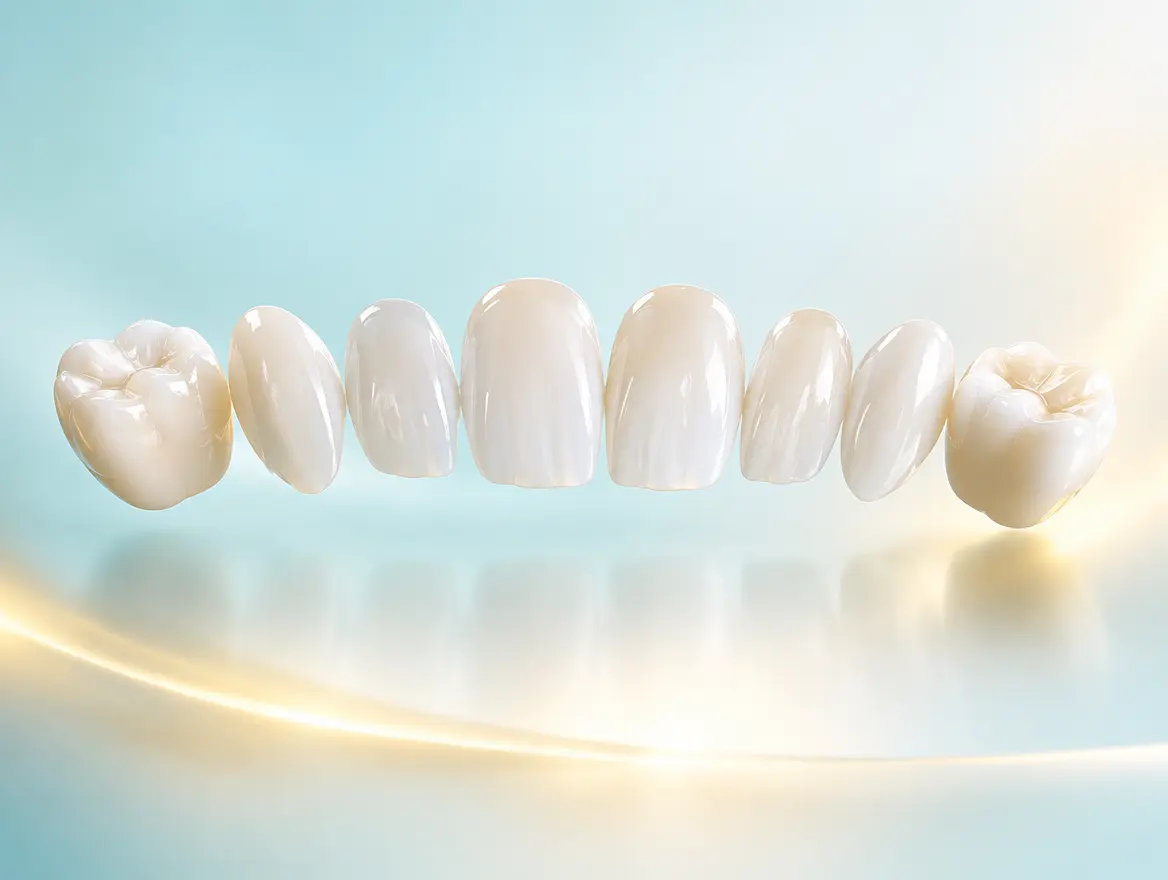
When a large part of the tooth is gone, or the tooth was already heavily filled, a porcelain veneer or a crown gives more strength. A veneer covers the front and edge. A crown covers the whole tooth and needs more preparation, so it is kept for teeth that really need it. Our dentists explain the difference on our E-max crowns and veneers pages. If a tooth with a dead nerve darkens, a crown may hide it better than bonding.
Looking after the tooth until you are seen
- Cover a sharp edge with a small piece of sugar-free chewing gum or orthodontic wax from a chemist, so it does not cut your tongue.
- Take paracetamol or ibuprofen as the packet directs, if they are safe for you.
- Avoid very hot or very cold drinks; room-temperature water is kindest.
- Do not bite into anything firm with the broken tooth. Cut food small and chew at the back.
- Keep brushing gently, including the broken tooth. Plaque on a raw edge makes things worse.
After the repair: follow-up matters
A tooth can look fine on the day and change later. The IADT guidelines recommend follow-up checks, often at around six to eight weeks and again at a year, to make sure the nerve is still healthy. Signs to report sooner are a tooth that turns grey, a small spot on the gum above it, or a dull ache when you tap it. These can mean the pulp has died slowly after the knock, which happens even when the chip itself was small.
If you play contact sport or cycle, ask about a custom mouthguard. If you grind your teeth, a night guard protects both your natural teeth and any bonding or veneers.
Chips, wear and "Turkish teeth"
A single chip is a reason to see your own dentist, not to book a flight. Where we do come in is later, when people have several worn, chipped or old-filled front teeth and want a planned, longer-term fix. Some arrive having heard about "Turkish teeth" and assume the answer is crowns on everything. Often it is not. A single chipped tooth beside healthy neighbours is usually best repaired on its own.
At Precious Dental we start from your photos and a recent X-ray, sent by WhatsApp or the contact form. A dentist writes back with an itemised plan and explains why each tooth gets what it gets. We prefer to keep healthy teeth rather than crown them, and bonding is £125 per tooth if that is all you need. For larger repairs, an E-max laminate veneer is £300 per tooth and an E-max crown £225. Veneers carry a 3-year written guarantee and crowns 5 years; the conditions are in the written terms on our guarantee page.
The short version
Keep the piece moist, check for signs of an exposed nerve or a loose tooth, and call your dentist or NHS 111 the same day. Small chips are usually bonded or smoothed. Big ones may need a veneer or crown, and any knocked tooth deserves a follow-up check in the months that follow, even if it feels fine.
Sources
- NHS: Chipped, broken or cracked tooth
- Bourguignon C et al. IADT guidelines for the management of traumatic dental injuries: 1. Fractures and luxations. Dent Traumatol 2020
- Dental Trauma Guide (IADT)
- Oral Health Foundation: Dental erosion
Checked October 2026. Where we give our own view as a clinic, we say so.
Common questions
Is a chipped tooth an emergency?
Usually not, but you should still contact a dentist the same day. It becomes urgent if the nerve is showing (a pink or red dot in the break), the tooth is loose or out of position, you have hit your head, or the pain is severe. Out of hours, call your dentist's answerphone or NHS 111.
Can a dentist stick the broken piece back on?
Often, yes, if the piece is large, clean and has been kept moist. The NHS advises keeping it in milk or saliva and bringing it with you. The reattached piece usually matches your tooth better than any filling material.
Will a small chip get worse if I leave it?
A tiny chip at the edge of the enamel may never change. A larger one can leave a sharp edge, collect stain or crack further when you bite. Ask your dentist to look at it even if it does not hurt.
My chipped tooth is sensitive to cold. Is that normal?
Short sensitivity is common when the inner dentine is exposed. A covering of bonding usually settles it. Pain that lingers after the cold has gone, throbs on its own or wakes you at night needs a dentist sooner, as the nerve may be affected.
Can a chipped tooth be fixed abroad?
The first aid and any urgent care should happen at home, with your own dentist. A cosmetic repair can be planned later. If several front teeth are worn or chipped, some people look at veneers or crowns as part of wider dental work in Turkey. Our dentists start from a photo and an X-ray.
Ask a Turkish dentist for a free written plan
Phone photos of your smile or an old X-ray are enough. You get the treatment, the implant brand and the price in pounds on paper, with no obligation to book.