Tooth extraction in Turkey: when a tooth comes out, and when we keep it
At our Turkish dental clinic in Antalya, extractions that are part of your treatment plan cost nothing. What matters more is whether the tooth should come out at all, and how the gap will be handled.
 Checked for accuracy by Dt. Hüseyin Yavuz Özbek, our implant surgeon · Last updated October 2026
Tooth extraction in Turkey at Precious Dental is free when it is part of your treatment plan with us, including wisdom teeth and teeth removed before implants or full-arch work. Each extraction is planned on an X-ray or 3D scan and done under local anaesthetic, with sedation by an anaesthetist available for nervous patients. Most sockets are sore for a day or two and then settle. If a tooth can be saved with a good outlook, we tell you so before anything is removed.
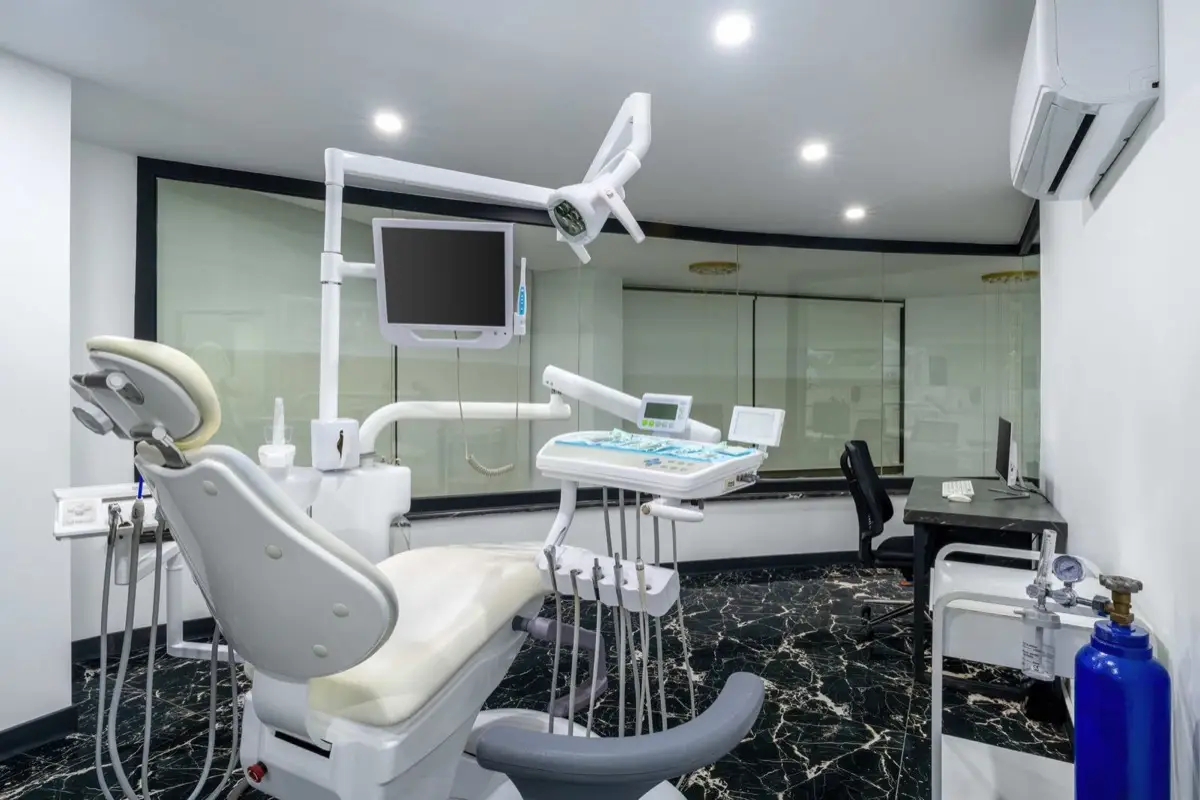
A tooth extraction in Turkey is rarely the main reason for a trip, but it is part of many of them. When patients come to our Turkish dental clinic for implants, a bridge or a full set of new teeth, one or more failing teeth often need to come out first. At Precious Dental in Antalya those extractions are free when they are part of your treatment plan. This page covers how we decide, how removals are done, how the socket heals, and the cases where we would rather keep the tooth.
When a tooth needs to come out
We only advise removal when keeping the tooth would cause more trouble than it solves. The usual reasons we see in UK patients are:
- a crack that runs down into the root, which no crown can hold together
- decay so deep that too little tooth is left above the gum to rebuild
- advanced gum disease, where the bone holding the tooth has mostly gone and the tooth is loose
- a root-treated tooth that has become infected again and has a poor outlook for retreatment
- a wisdom tooth that keeps getting infected, is decaying, or is damaging the tooth in front
- teeth that cannot support a full-arch bridge, where implants will carry the new teeth instead
A tooth that looks bad is not always a tooth that must go. Old, dark fillings and chipped edges can usually be repaired. The decision rests on the root and the bone, which is why we look at an X-ray before we say anything.
When we try to save the tooth instead
Our dentists prefer to keep a healthy root where they reasonably can. Your own tooth keeps the bone around it, needs no healing period and still feels like part of you. If a tooth has an infected nerve but a sound root and enough structure above the gum, root canal treatment and a crown may give it many more years. If gum disease has loosened it only slightly, gum treatment first may be enough. See gum treatment for how that works.
We also see the opposite: patients told elsewhere that a whole row of teeth must be replaced, when only one or two are failing. If you have a recent X-ray or a panoramic OPG, send it and a dentist will reply in writing with their own opinion. That costs nothing and does not commit you to anything.
How an extraction is done at our clinic
- Review from home. You send photos and an X-ray by WhatsApp or the form. The dentist marks in your written plan which teeth are likely to come out and why.
- Scan on day one. Your first appointment in Antalya includes a 3D CBCT scan. It shows the shape and number of roots, how near they lie to the lower jaw nerve or, for upper molars, the sinus, and how much bone surrounds them.
- Numbing. Local anaesthetic is given and tested before the dentist starts. If you are very anxious, ask for IV sedation, which an anaesthetist gives. See sedation dentistry.
- Removal. The tooth is loosened gently and lifted out. Teeth with curved roots or buried wisdom teeth may be divided into pieces, or need a small cut in the gum. The aim is to protect the bone, especially where an implant will go.
- Closing up. You bite on gauze to help a clot form. Stitches are placed if needed. You leave with written aftercare and any medicine prescribed.
Wisdom teeth
NICE guidance in the UK does not recommend removing wisdom teeth that are healthy and causing no problems. We follow the same thinking. A wisdom tooth that sits quietly and can be cleaned is usually left alone. Removal makes sense when there is repeated infection of the gum over the tooth, decay that cannot be treated, damage to the neighbouring molar, a cyst, or when the tooth is in the way of other planned work.
Upper wisdom teeth are often straightforward. Lower ones that are tilted or partly buried need more care, because the nerve that supplies feeling to the lip and chin runs close to their roots. The 3D scan shows that distance before the dentist decides how to approach the tooth.
Extractions before implants or full-arch teeth
Most of the extractions we carry out are part of implant work. For a single implant, the tooth is usually removed on the first trip and the implant placed either straight away or after the socket heals, depending on infection and bone. For full-arch treatment such as All-on-4 or All-on-6, the remaining failing teeth usually come out at the implant appointment, and temporary teeth are part of the package. The dentist confirms the sequence after the 3D scan.
The timing is set by the scan, not by the calendar. If an infection needs to settle first, we tell you, even if it means changing the plan. Read more on full mouth implants and dental implants.
Healing of the socket, and dry socket in brief
After a tooth comes out, the socket fills with a blood clot. That clot protects the bone and is the frame that new gum grows across over the next week or two. Bone fills in from below over the following months. For most people the area is tender for a day or two and then steadily improves.
The rules for the first days are simple: keep the gauze in place as told, avoid straws and hot drinks on day one, do not rinse on the first day, then from day two swirl warm salt water softly round the mouth after eating. Chew on the opposite side and keep to soft food.
A small number of patients get a dry socket, where the clot is lost early and the pain gets worse from about the second or third day. It is more likely after difficult lower back extractions and in smokers. We strongly advise no smoking for at least 72 hours. If it happens, a dentist cleans and dresses the socket, which usually brings relief quickly.
Who should take extra care, and the honest risks
Please tell us in advance if you take blood thinners, have had treatment for osteoporosis or cancer, have diabetes, or have had radiotherapy to the head or neck. These do not always rule out an extraction, but some change how and when it should be done, and a few mean an extraction is better done at home under your own doctor's care. A trip purely for one simple extraction is also rarely worth the travel.
| Possible problem | How often | What happens |
|---|---|---|
| Soreness and swelling | Common, mild | Peaks in a day or two, eased by painkillers |
| Bleeding | Common for a few hours | Firm pressure on gauze; contact us if it does not stop |
| Dry socket | Uncommon | Socket cleaned and dressed by a dentist |
| Infection | Uncommon | Assessed by the dentist; medicine if needed |
| Numbness of lip or chin | Rare, lower wisdom teeth | Usually temporary; risk checked on the scan first |
What it costs and how the trip works
Extractions that are part of your treatment with us are free. That includes teeth removed before implants and the failing teeth taken out on the day of full-arch work. The rest of the plan is priced openly: an implant is £300, an implant with a zirconia crown £450, and All-on-4 £6,000 for both jaws. If bone is short after an extraction, a bone graft is £150 per 1cc. Full prices are on our prices page.
Extractions fit into your main trip. A first implant trip is usually 4 hotel nights and the second 5 nights; a crown or zirconia trip is 5 nights. Your airport, hotel and clinic transfers come with the package. Flights are not. You go home with copies of your X-rays and scans.
Sources
- NHS: Wisdom tooth removal
- NICE TA1: Guidance on the extraction of wisdom teeth
- Oral Health Foundation: Wisdom teeth
- Oral Health Foundation: Smoking and oral health
Checked October 2026. Where we give our own view as a clinic, we say so.
What this means for you
No charge for removals
Extractions in your plan are included, so the price you see in writing is not inflated by a fee per tooth.
Planned on a scan
A 3D CBCT scan shows roots, nerves and the sinus before the tooth is touched, which helps the dentist choose the gentlest way out.
The gap is planned too
We decide with you what replaces the tooth, an implant, a bridge or nothing, before it is removed rather than after.
A second view first
If another dentist has said a tooth must go, we look at the X-ray ourselves. Sometimes the tooth can stay.
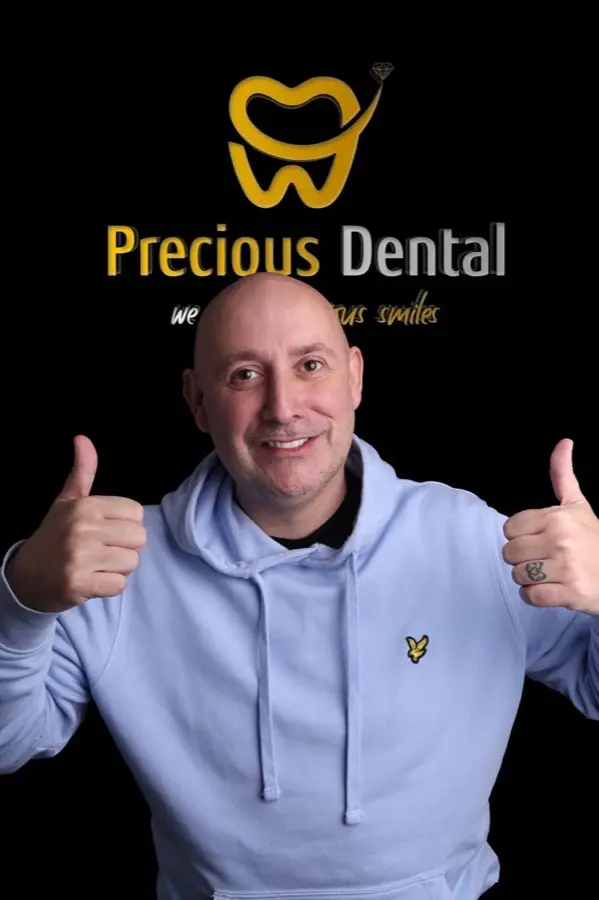
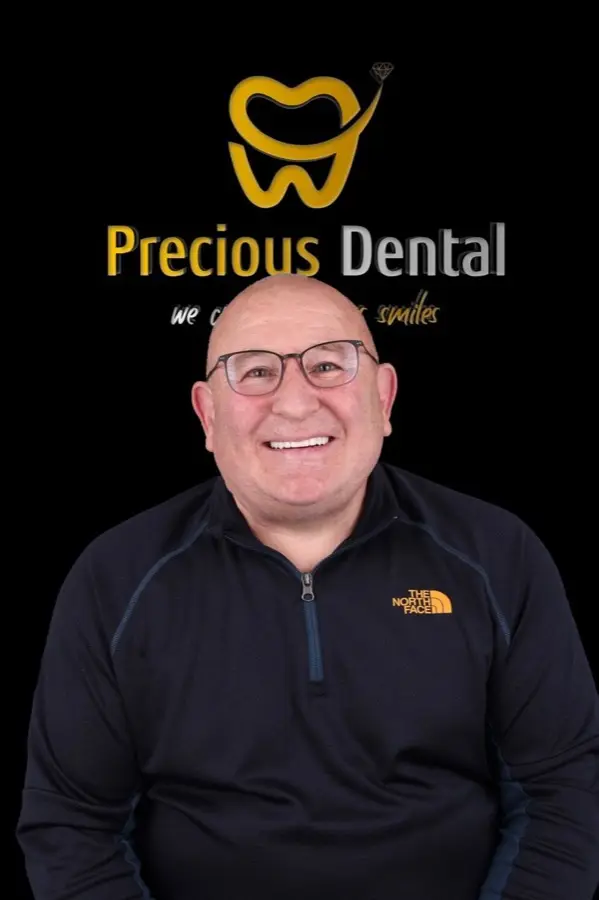
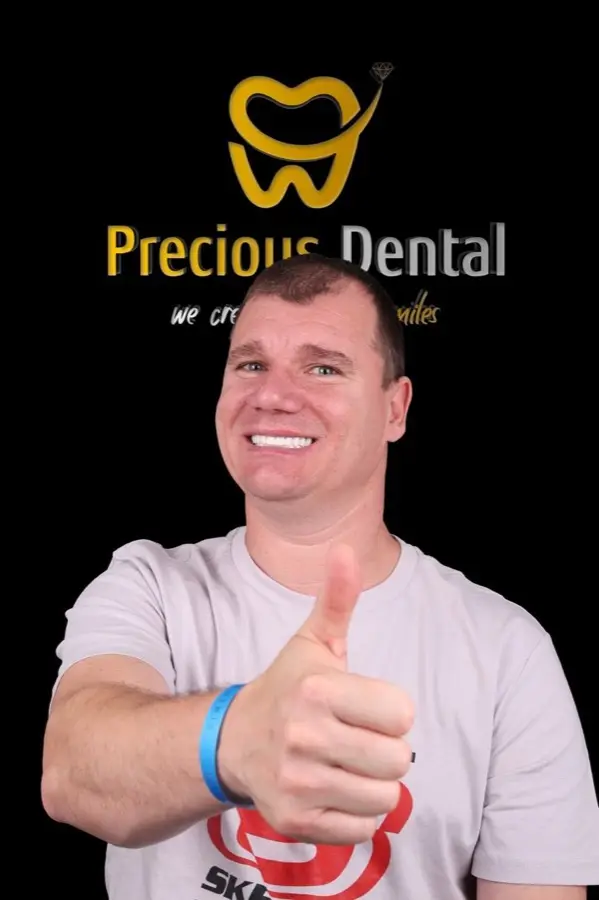
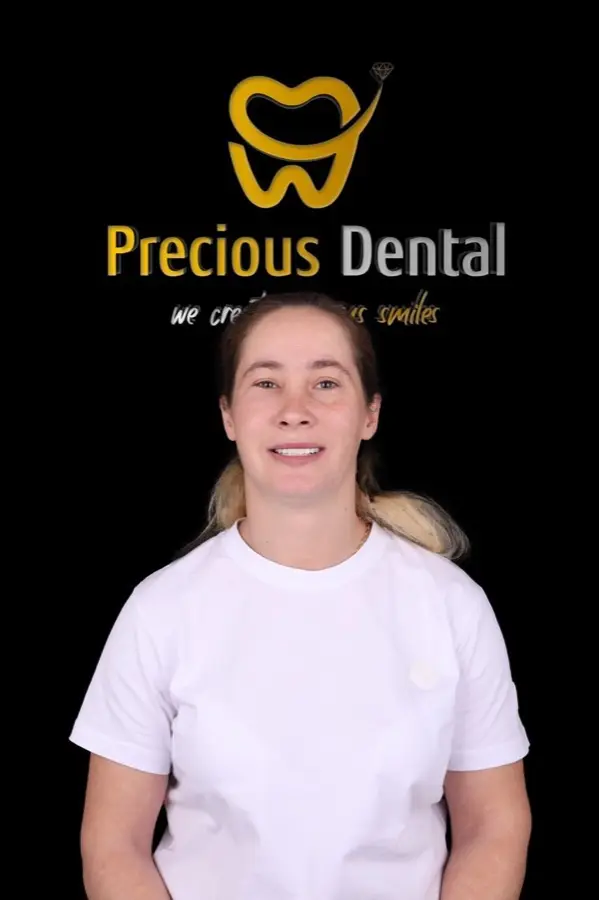
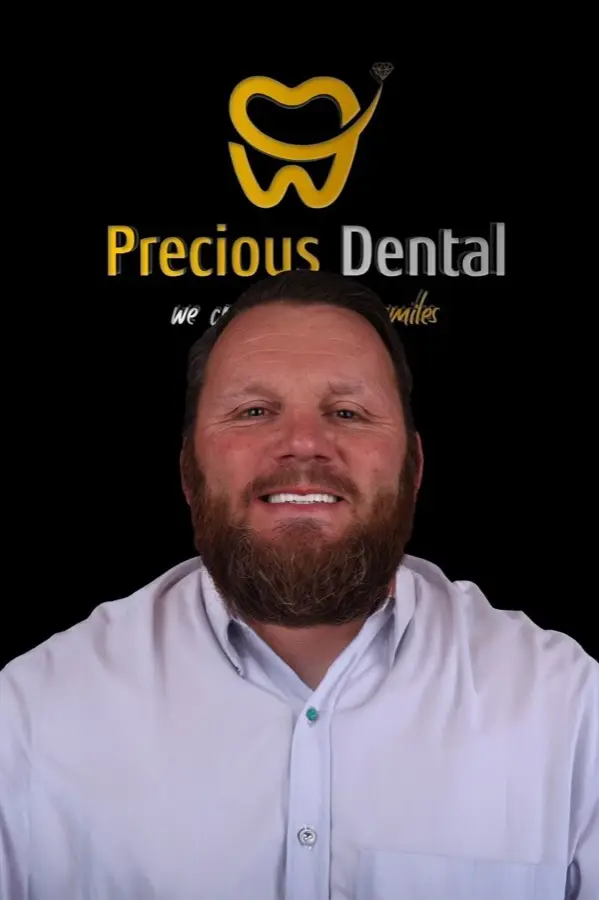
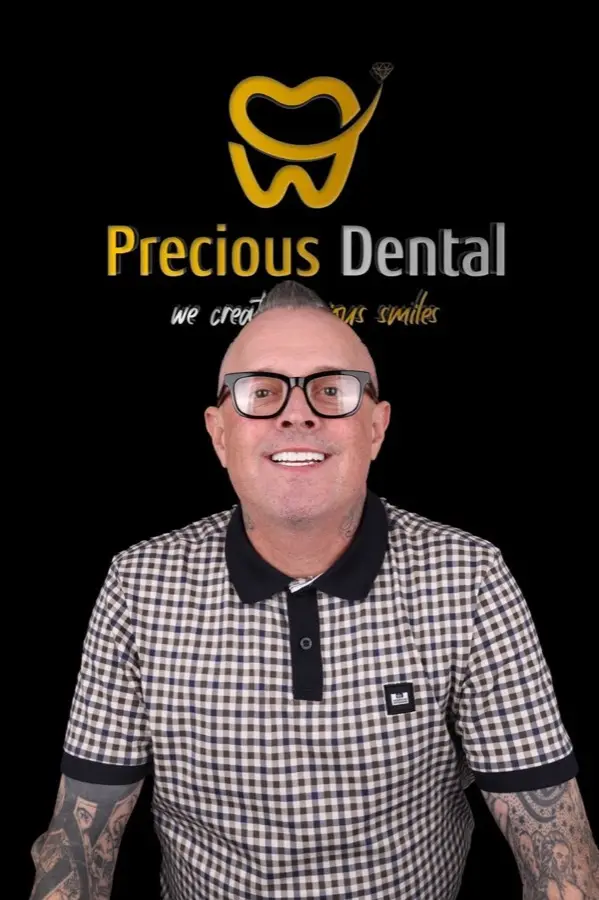
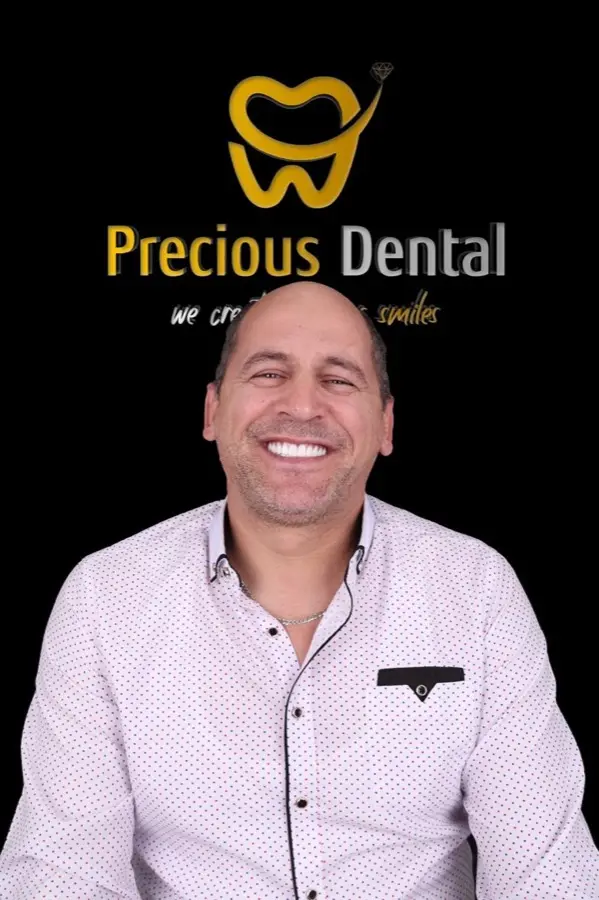
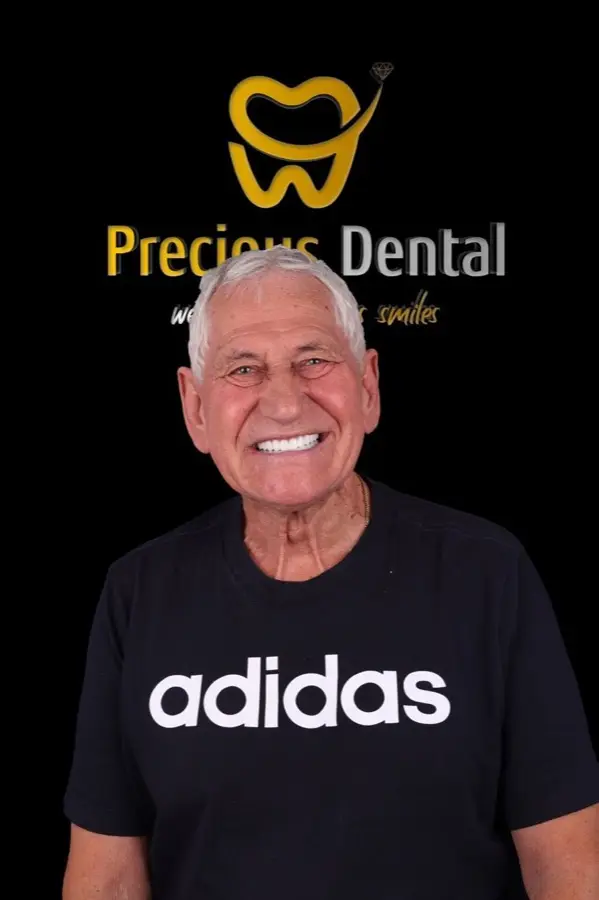
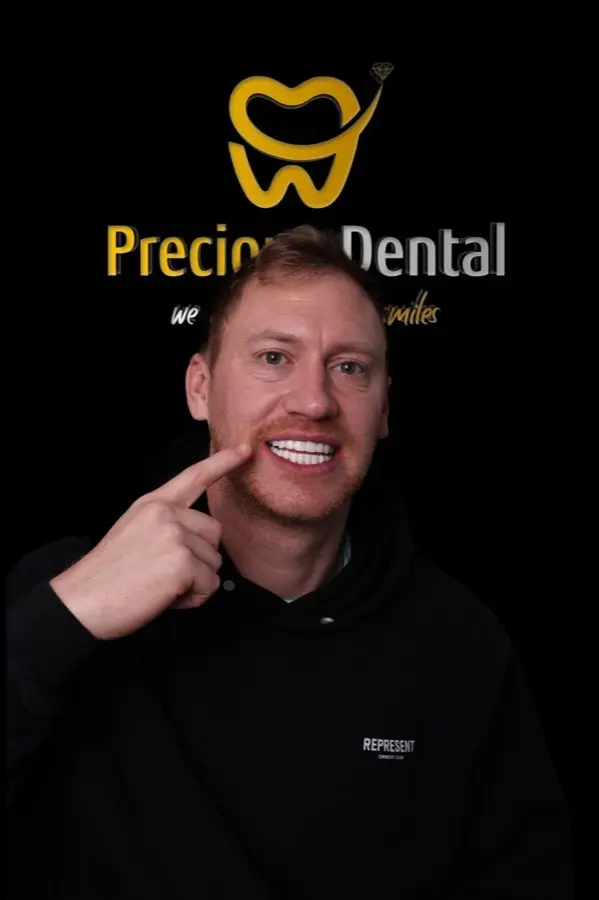
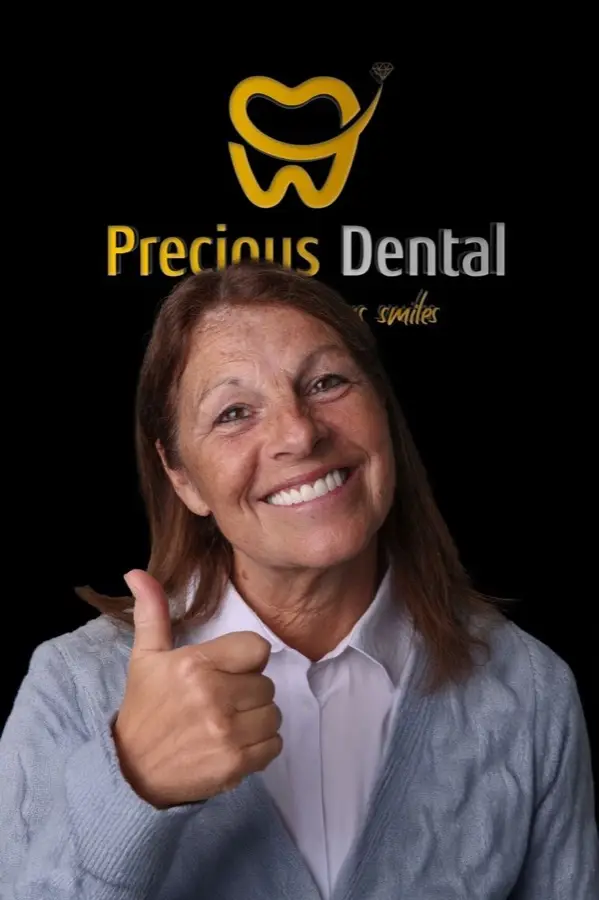
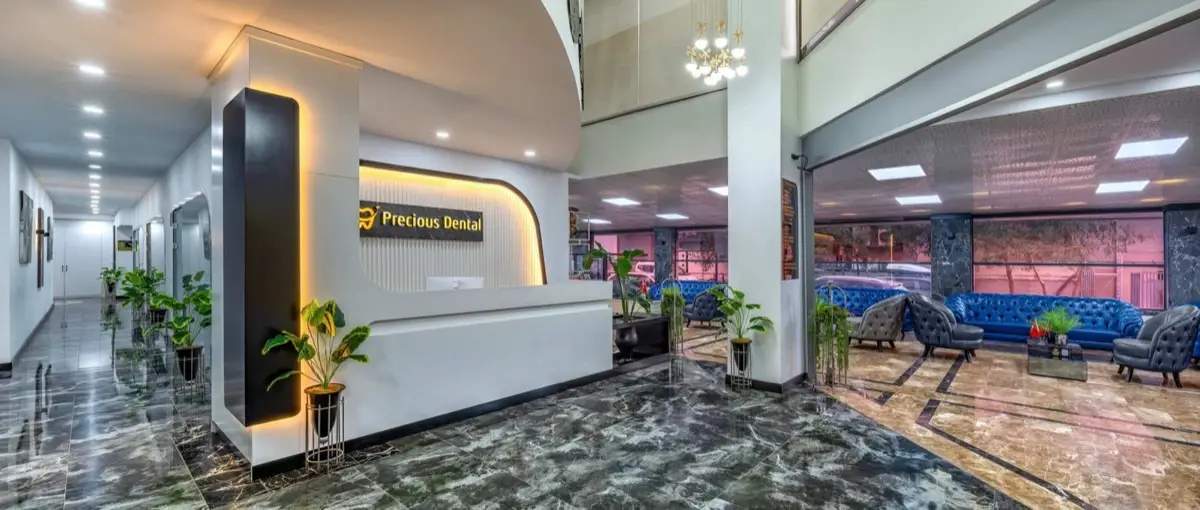
Real Precious Dental patients
Photographed at our clinic after treatment. Results vary from person to person.


- 1
Send photos or an X-ray
Message us on WhatsApp or use the form. A few phone photos of your teeth, or a recent X-ray, are enough to start.
- 2
Get a written plan and price
A dentist looks at your photos and replies with an itemised plan in pounds, including which implant brand and how many teeth.
- 3
Book flights that suit you
You choose the dates and book your own flights. We arrange the hotel and every transfer.
- 4
Scan, plan and treatment in Antalya
Your first visit starts with an examination and 3D scan. The final price is confirmed in writing before any treatment.
- 5
Fly home with your records
You leave with your X-rays and scans, an implant passport if you had implants, and a coordinator to message afterwards.
Common questions
Is tooth extraction really free at your clinic?
Yes, when the extraction is part of a treatment plan with us, such as implants, a bridge, crowns or full-arch work. It appears in your written plan at no cost. If you want a single extraction with no other treatment, ask us and we will tell you in writing what applies.
Can you take out wisdom teeth?
Yes. Upper wisdom teeth are often simple. Lower ones that are buried or tilted can need a small surgical procedure. The dentist checks the 3D scan first to see how close the roots sit to the nerve.
Can an implant go in on the same day as the extraction?
Sometimes, if there is no active infection and enough bone. Often the socket is left to heal first. The dentist decides after the 3D scan and explains why in writing. See dental implants.
Will it hurt?
The area is numbed with local anaesthetic, so most people feel pressure and pulling rather than pain. Afterwards, soreness is usually mild and eases over a few days. Ordinary painkillers normally help.
Can I fly home soon after an extraction?
After a routine extraction most people are comfortable to fly within a day or two. If you had a surgical extraction or sedation, ask the dentist about timing. Your plan already allows time for this.
What if the socket hurts more after a few days?
Pain that climbs from the second or third day, often with a bad taste, can be dry socket. Message our coordinators on WhatsApp. If you are home, a local dentist can clean and dress it in a short visit.
Related treatments
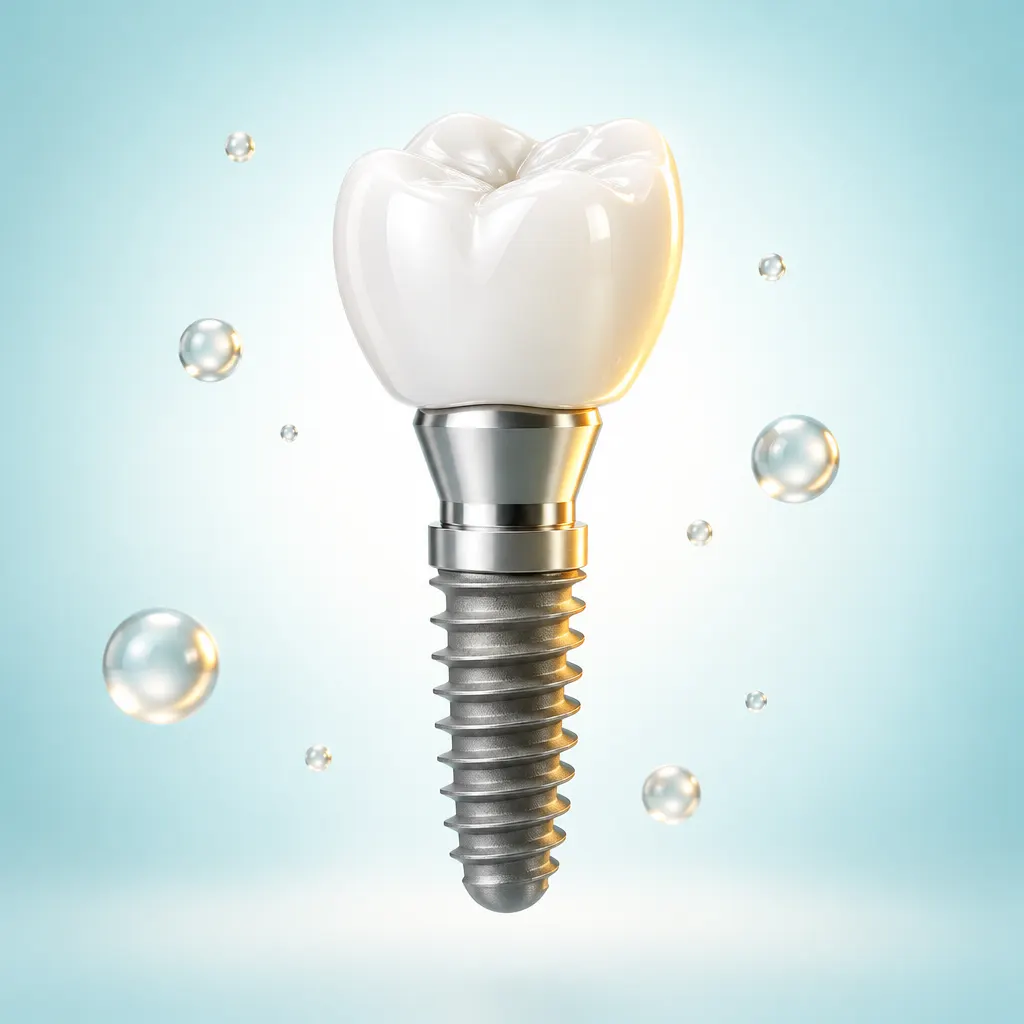
Turkish dental implants
MegaGen, Neodent or Straumann at one price, planned on a 3D scan, two trips.
Find out more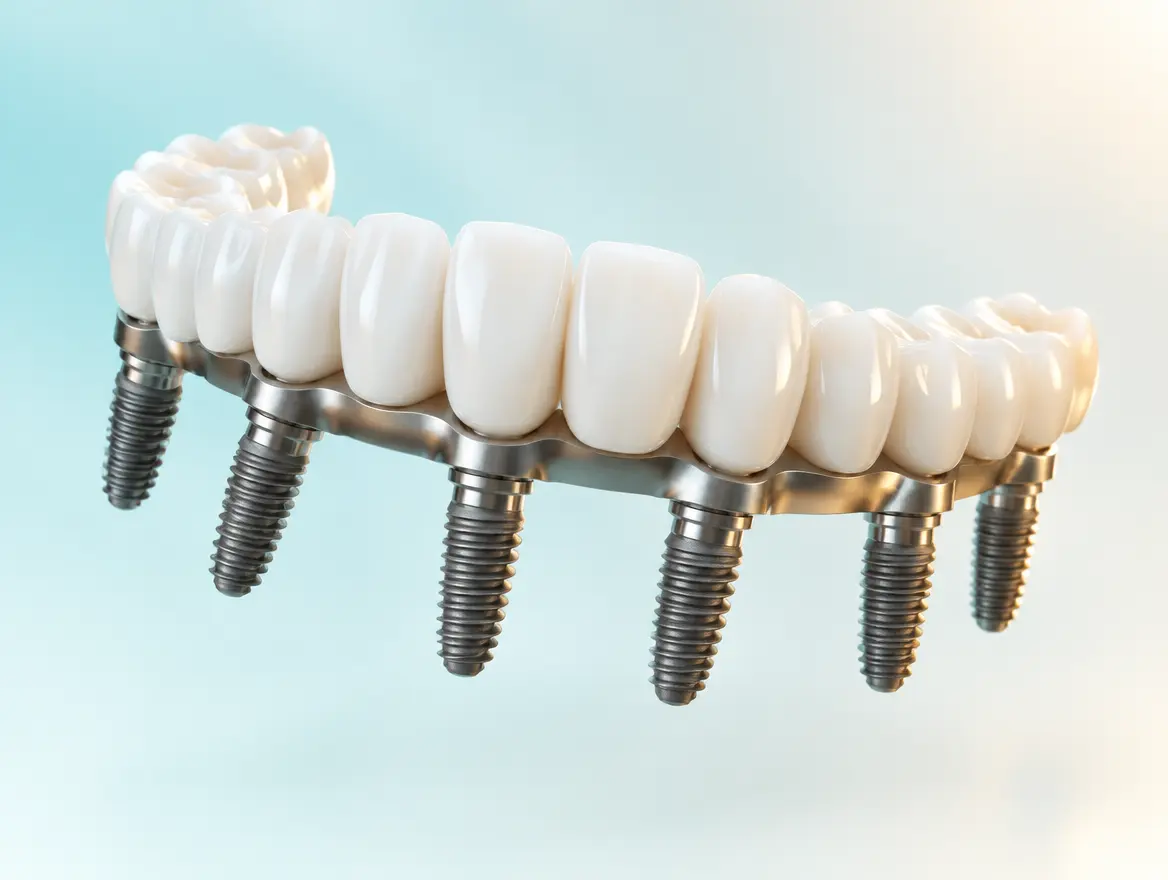
Full-mouth implants
Fixed teeth in both jaws on four or six implants each, chosen on your 3D scan.
Find out more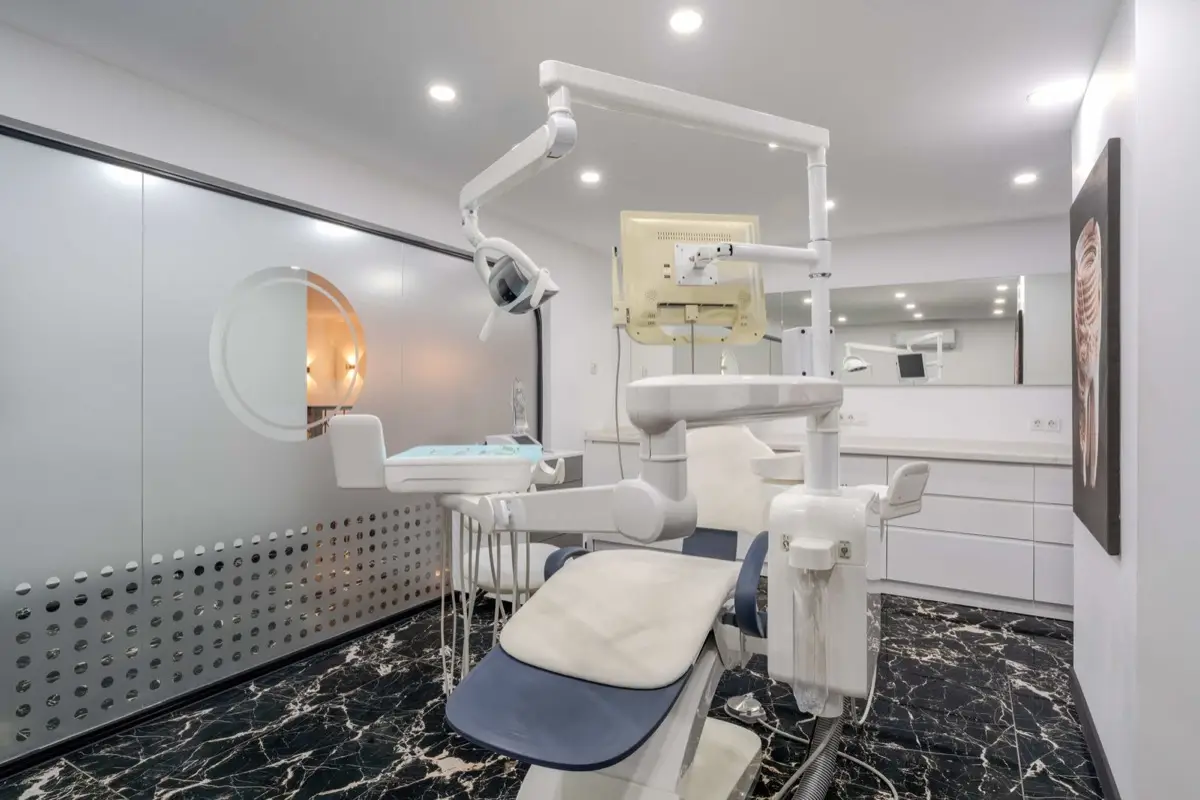
Sedation dentistry
IV sedation or general anaesthesia by an anaesthetist, for nervous patients.
Find out moreGet your free treatment plan
Send a few photos or an X-ray. A dentist replies with a written, itemised plan in pounds before you book anything.
Prefer to talk? Message a patient coordinator on WhatsApp.
WhatsApp +44 7575 589099 info@dentprecious.com- Written plan in pounds, brand named
- Final price fixed after your 3D scan
- Your details used only to reply to you