Gum disease treatment in Turkey, before any new teeth go in
Gums that bleed or have shrunk are a common finding when UK patients send us their X-rays. Here is what we do about it at our Turkish dental clinic, and what has to carry on at home.
 Checked for accuracy by Dt. Hüseyin Yavuz Özbek, our implant surgeon · Last updated October 2026
Gum disease treatment in Turkey at Precious Dental starts with measuring the gum pockets and checking bone levels on X-rays, followed by a deep clean below the gum line under local anaesthetic. We treat the gums before crowns, veneers or implants, because new work placed on inflamed gums tends to fail early. Mild cases can often be settled within the same trip. Deeper disease needs follow-up cleaning with a dentist or hygienist at home. The price is set out in your written plan.
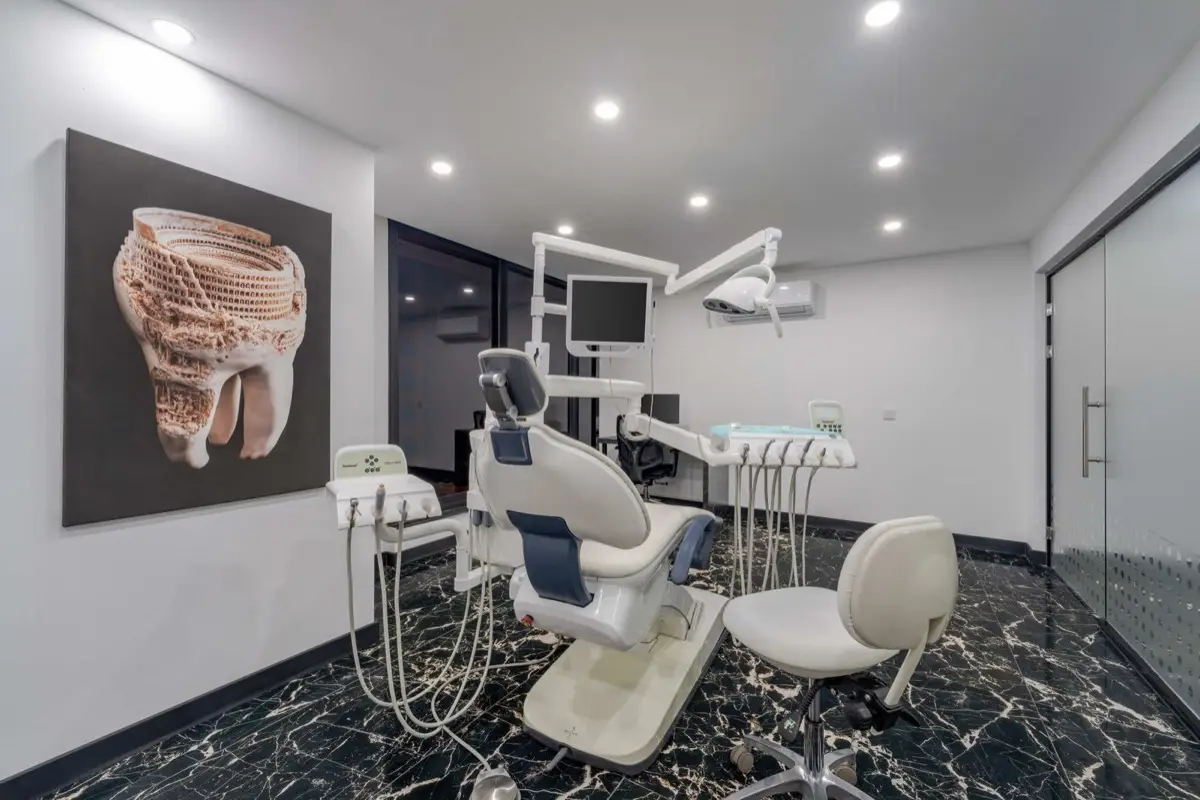
Gum disease treatment in Turkey is not what most people picture when they think of dental work abroad. It still does more for the life of new teeth than almost anything else we offer. At our clinic in Antalya, a dentist looks at the gums on every X-ray a patient sends, before thinking about crowns, veneers or implants. If the gums are inflamed or the bone around the teeth has started to shrink, that comes first. This page explains why, what the treatment involves, and the part that only you and your dentist at home can carry on.
What gum disease is, in plain terms
Plaque is the soft, sticky film of bacteria that builds up on teeth every day. Where it sits along the gum line, the gum reacts by becoming red, puffy and prone to bleeding. That early stage is called gingivitis, and it reverses once the plaque is cleaned away properly.
If it carries on for months or years, the inflammation spreads deeper. The gum comes away from the tooth and forms a pocket, plaque hardens into tartar inside it, and the bone that holds the tooth slowly breaks down. This is periodontitis. Bone lost this way does not normally grow back by itself, which is why catching it early matters. According to the NHS, a large share of adults have some gum disease, and it is often painless.
Signs to look out for
- Bleeding when you brush, floss or bite into an apple
- Gums that look red or swollen rather than pale pink and firm
- Breath or taste that turns stale again within hours of brushing
- Teeth that look longer, or new gaps opening between front teeth
- A tooth that feels loose, or a bite that feels different
- Your dentist mentioning pockets, bone loss or a "deep clean"
None of these on its own proves you have periodontitis. Equally, having none of them does not prove you are free of it, especially if you smoke. A panoramic X-ray tells us a great deal, so it is worth sending one if you have it.
Why we treat gums before crowns, veneers or implants
Every crown, veneer or implant tooth has an edge that meets the gum. If that gum is swollen when we scan and fit the new tooth, two things tend to go wrong. The scan is less accurate because of bleeding, and later, as the swelling goes down, the gum pulls back and leaves a visible line or a strip of root. That is behind many of the complaints people have about Turkish teeth a few years on.
The bigger risk is underneath. A tooth that has lost much of its bone may look fine but will not carry a crown for long. Implants are vulnerable too: the bacteria involved in gum disease can damage the tissue that holds an implant, a problem called peri-implantitis. Bringing the gums under control first gives your new teeth a fair start. See Turkish teeth and full mouth crowns for how this fits into crown plans.
Smoking and diabetes: the two big links
Smoking. The Oral Health Foundation lists smoking as one of the main causes of gum disease. Smokers' gums often bleed less, because circulation to the gum is reduced, so a key early clue goes missing. Healing after a deep clean is slower in smokers, and the results are generally poorer. Cutting down helps; stopping helps most. If you smoke, please tell us. It changes our advice on timing.
Diabetes. Research describes a two-way relationship between periodontitis and diabetes. People whose blood sugar is poorly controlled are more likely to have severe gum disease, and treating gum disease has been linked with modest improvements in blood sugar control, as summarised in a 2012 review in Diabetologia. If you have diabetes, let us know your recent HbA1c if you have it, and keep your GP or diabetes nurse informed about planned dental work.
How gum treatment works at our clinic
- X-ray review from home. A dentist checks the bone level around each tooth on your X-ray or OPG and notes any gum treatment in your written plan.
- Gum assessment in Antalya. On your first clinic day we take a 3D scan and measure the pocket around each tooth with a fine probe. Healthy pockets are shallow; deeper ones show where the gum has come away.
- Deep cleaning. Under local anaesthetic, the dentist clears plaque and tartar along the gum line and down inside each pocket, and the root surfaces are smoothed so the gum can settle back against them. This is often called scaling and root planing.
- Home-care routine. You are shown which interdental brush sizes suit your gaps, and how to brush along the gum line.
- Reassessment. Before crowns or implants go ahead, the dentist checks how the gums have responded and tells you in writing whether to proceed now or later.
The treatment itself usually takes one or two sessions over two to four days. For a few days afterwards, expect sore gums and teeth that twinge with cold drinks. This normally settles.
What fits in one trip, and what needs follow-up at home
| What we find | In Antalya | At home afterwards |
|---|---|---|
| Healthy gums | Crown, veneer or implant work goes ahead as planned | Usual check-ups and hygiene visits |
| Gingivitis | Professional clean early in the trip; work often goes ahead once gums calm down | Daily interdental cleaning; hygienist visits |
| Mild to moderate periodontitis | Deep clean; some work may proceed, some may wait | Follow-up cleans with a dentist or hygienist, usually every few months at first |
| Advanced periodontitis | Deep clean and a frank talk about which teeth can be kept | Ongoing gum care; a later trip once gums are stable |
The European periodontal guideline treats gum disease as a long-term condition with a maintenance phase that never really ends. We cannot provide those regular cleans from Antalya. A dentist or hygienist near you can, and we are happy to send them your X-rays and notes. We have no UK clinic or partner network, so this part is yours to arrange.
Who this is not for, and honest limits
If your gums are badly inflamed and you want crowns or veneers in the same week regardless, we will not do that. Waiting a few weeks costs far less than replacing failed work. People with very loose teeth from severe bone loss may be better served by extractions and implants once the rest of the mouth is healthy; see tooth extraction. Deep cleaning does not regrow lost bone, and the gums may sit lower afterwards, so some teeth can look a little longer.
Our written guarantee does not include gum treatment. Crown and implant guarantees also depend on keeping up hygiene and check-ups; the conditions are in the written terms on our guarantee page.
Price and trip
Gum treatment has no set fee on our price list, since one person needs a clean around a few teeth and another needs a full-mouth deep clean. It is priced in your written plan and shown as its own line. For context, a zirconia crown is £150 per tooth and an implant £300. A crown trip is usually 5 hotel nights, and gum treatment normally fits inside it. Transfers are included; flights are not. See all fees on our prices page.
Sources
- NHS: Gum disease
- Sanz M et al. (2020) Treatment of stage I-III periodontitis: the EFP S3 level clinical practice guideline. J Clin Periodontol
- Preshaw PM et al. (2012) Periodontitis and diabetes: a two-way relationship. Diabetologia
- Oral Health Foundation: Smoking and oral health
Checked October 2026. Where we give our own view as a clinic, we say so.
What this means for you
Work that lasts longer
Crowns and implants placed on calm, healthy gums have a better start than those fitted on gums that bleed and swell.
Honest timing
If your gums need weeks to heal, we say so before you book, rather than squeezing it into a week.
Bone checked on a scan
The 3D scan shows how much bone support each tooth has, which tells us which teeth are worth crowning.
A plan you can follow at home
You leave with a written home-care routine and advice on the follow-up cleans your own dentist or hygienist can do.
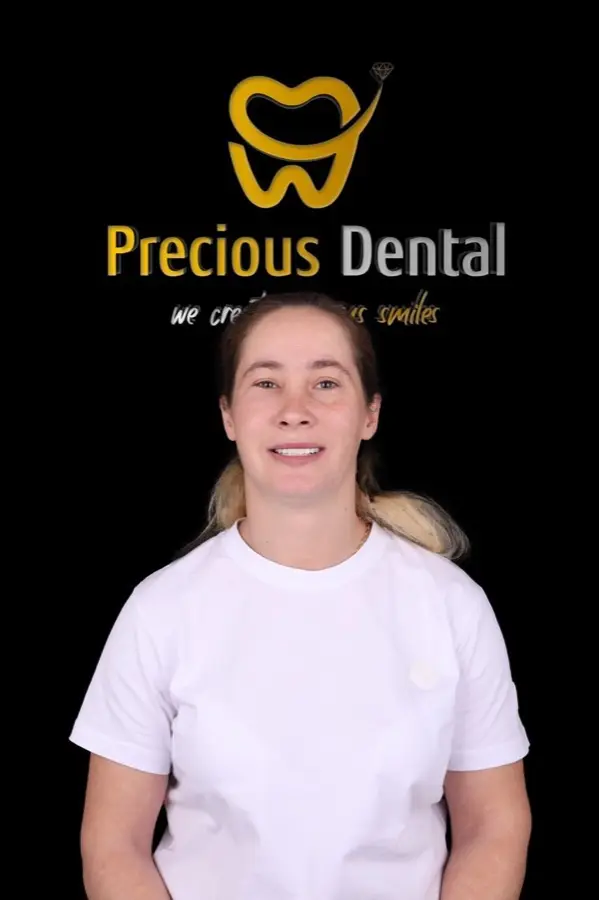
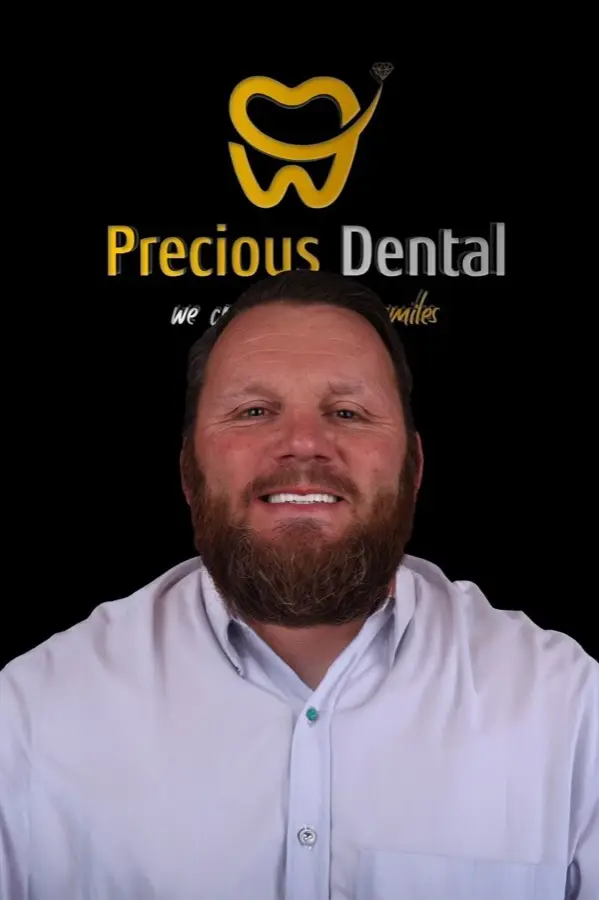
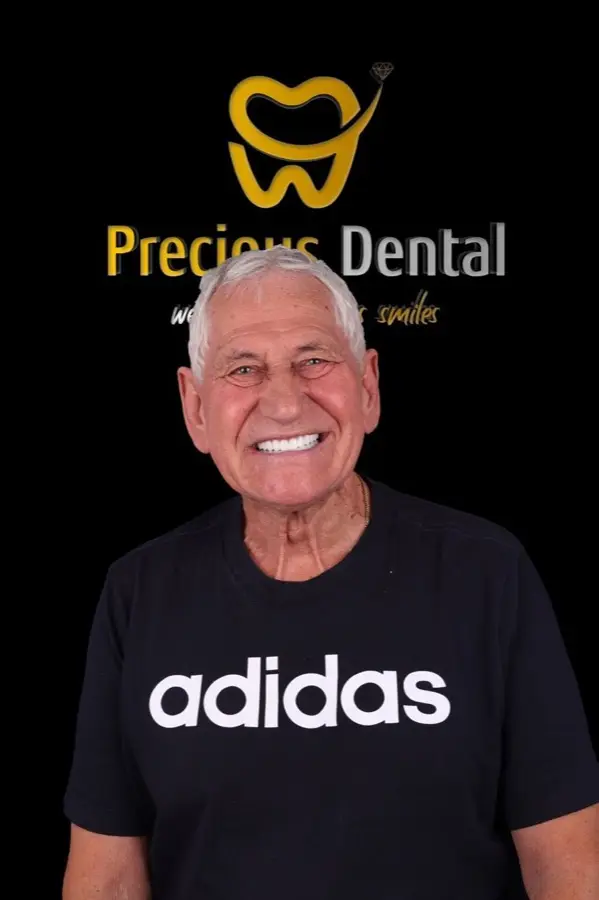
Real Precious Dental patients
Photographed at our clinic after treatment. Results vary from person to person.










- 1
Send photos or an X-ray
Message us on WhatsApp or use the form. A few phone photos of your teeth, or a recent X-ray, are enough to start.
- 2
Get a written plan and price
A dentist looks at your photos and replies with an itemised plan in pounds, including which implant brand and how many teeth.
- 3
Book flights that suit you
You choose the dates and book your own flights. We arrange the hotel and every transfer.
- 4
Scan, plan and treatment in Antalya
Your first visit starts with an examination and 3D scan. The final price is confirmed in writing before any treatment.
- 5
Fly home with your records
You leave with your X-rays and scans, an implant passport if you had implants, and a coordinator to message afterwards.
Common questions
Do I need gum treatment before Turkish teeth?
Only if your gums are inflamed or have lost bone. Many patients just need a professional clean. If deeper gum disease shows on your X-ray, we tell you in the written plan before you book.
Is a deep clean painful?
It is done under local anaesthetic, so most people feel scraping and vibration rather than pain. Gums can be tender and teeth sensitive to cold for a few days afterwards.
Can gum disease be cured in one trip?
Mild gum inflammation often settles within the trip with a clean and better brushing. Periodontitis is controlled rather than cured. It needs regular cleaning and good home care for life, wherever you live.
Will my teeth look longer after treatment?
Sometimes. As swelling goes down the gum can sit a little lower. That is the gum's true healthy level, and it is the level we design crowns and veneers to.
Can I still have implants if I have had gum disease?
Often yes, once the disease is under control. Untreated gum disease is a risk for the gum and bone around implants too, so it is treated first. See dental implants.
How much does gum treatment cost?
It depends on how many teeth are affected and how deep the pockets are. A dentist prices it in your written plan after seeing your X-ray, and it is listed separately so you can see it.
Related treatments
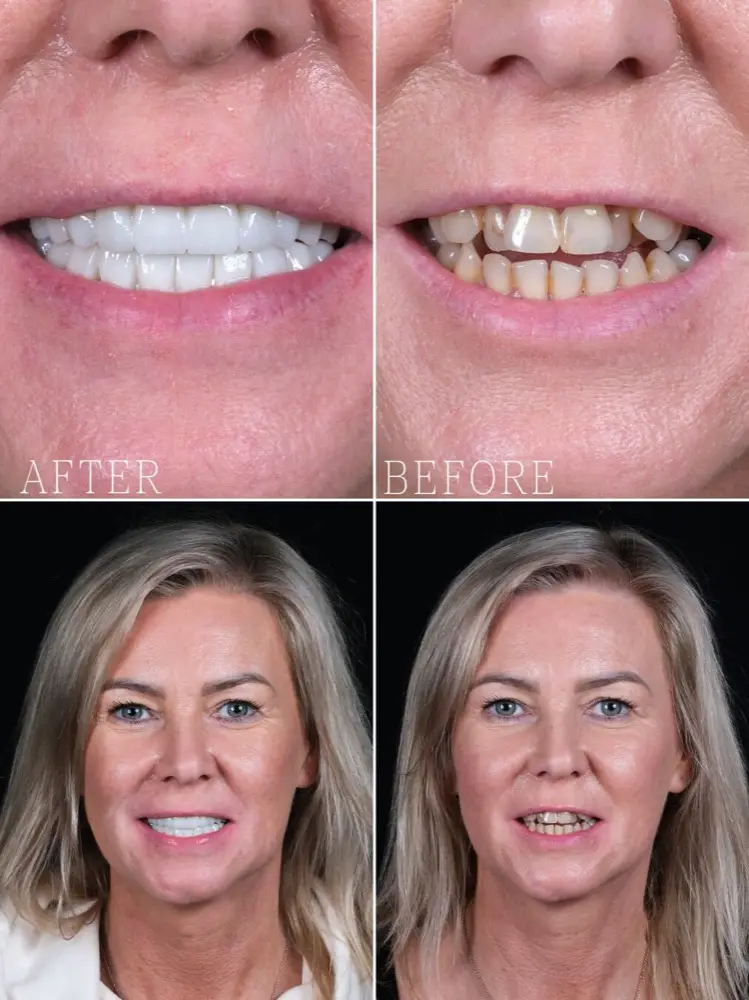
Turkish teeth
Crowns, veneers or your own teeth: an honest plan for a natural-looking smile.
Find out more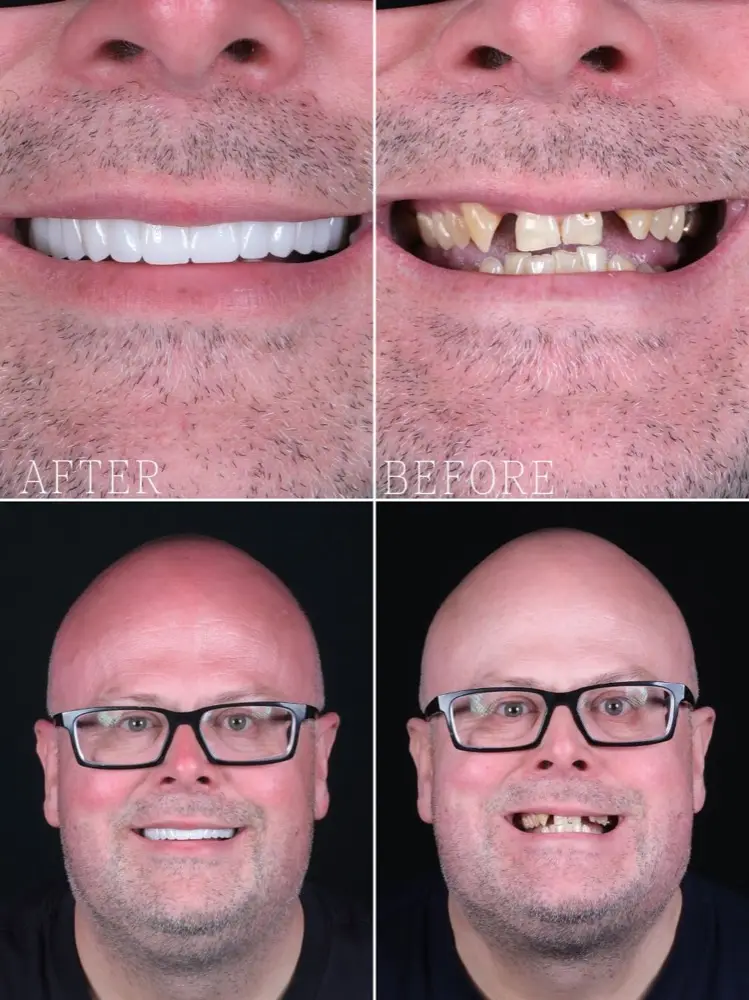
Full mouth crowns
A full set of zirconia crowns, counted tooth by tooth, in one 5-night trip.
Find out more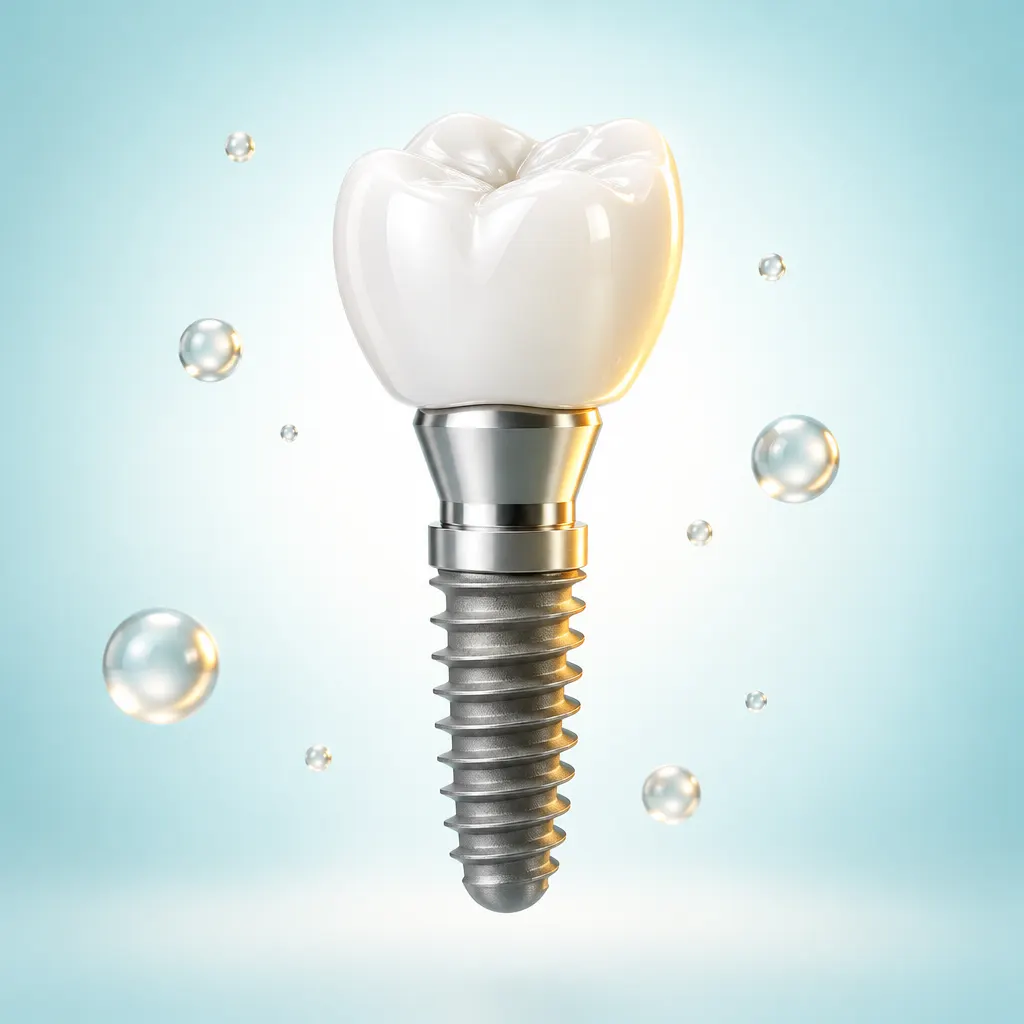
Turkish dental implants
MegaGen, Neodent or Straumann at one price, planned on a 3D scan, two trips.
Find out moreGet your free treatment plan
Send a few photos or an X-ray. A dentist replies with a written, itemised plan in pounds before you book anything.
Prefer to talk? Message a patient coordinator on WhatsApp.
WhatsApp +44 7575 589099 info@dentprecious.com- Written plan in pounds, brand named
- Final price fixed after your 3D scan
- Your details used only to reply to you