Interdental brushes: a beginner's guide
Interdental brushes are small bottle-brushes for the gaps between your teeth. They take a week or two to get used to, and after that most people find them quicker than floss.
 Checked for accuracy by Dt. Hüseyin Yavuz Özbek, our implant surgeon · Last updated October 2026
An interdental brush cleans the sides of the teeth where a toothbrush cannot reach. Use one a day, choosing a size that fits snugly without forcing, and slide it gently in and out of each gap a couple of times. Gums often bleed for the first week or two and then settle as the inflammation calms down. UK guidance says they work better than floss for adults with gum disease or larger gaps; floss is still useful where teeth are very tight.
Interdental brushes are tiny brushes on a thin wire, made to fit into the gaps between your teeth. If your dentist or hygienist has just handed you a packet and you are not sure what to do with them, this guide is for you. In short: find a size that fits each gap snugly, push it through gently once a day, move it in and out a couple of times, and expect your gums to bleed a little for the first week or so. After that, most people find they are quicker and easier than floss.
We are dentists at a clinic in Antalya treating mostly UK patients over 50. Gum problems between the teeth are one of the most common things we find on X-rays, often in people who brush well but never clean the gaps.
Why the gaps matter
A toothbrush cleans the front, back and biting surfaces of your teeth. It cannot reach the sides where two teeth meet, or the small triangle of gum just below that contact point. The Oral Health Foundation points out that this is where plaque and food collect, and cleaning there every day helps prevent decay, gum disease and bad breath.
With age, those gaps change. Gums recede, the triangle between teeth opens up, and the exposed root surfaces are softer and decay more easily than enamel. Bridges, crowns and implants add more edges for plaque to cling to. This is why dentists so often start recommending interdental brushes to patients in their 50s and beyond.
What the evidence says
A 2019 Cochrane review looked at home cleaning between the teeth, on top of brushing. It found low-certainty evidence that using interdental brushes as well as a toothbrush reduces gum inflammation compared with brushing alone, and that interdental brushes may reduce inflammation more than floss. The evidence on preventing decay was too thin to draw conclusions.
"Low certainty" means the trials were small and short, not that the brushes do not work. UK guidance for dental teams, GOV.UK's Delivering better oral health, is more direct: people with gum disease, who usually have larger spaces between their teeth, should use interdental brushes, which are more effective than floss or tape. Where teeth are close together, floss or tape can be used instead. Many people end up using both.
What about floss and water flossers?
Floss is not useless. It is the best tool where teeth touch tightly and a brush will not fit, and the NHS still gives instructions for using it. The problem is that many people find it fiddly, especially at the back of the mouth or with stiff fingers, and so they stop. A tool you use every day beats a better one left in the drawer.
Water flossers, which squirt a fine jet of water between the teeth, were also covered by the Cochrane review. There was low-certainty evidence that they may reduce gum inflammation when used with brushing, compared with brushing alone. They can be helpful around implants, bridges and braces, and for people with limited hand movement. They do not scrape plaque off the tooth surface in the same way as a well-fitting brush, so many hygienists suggest them as an addition rather than a replacement.
Wooden sticks and plastic picks are another option, but they are less effective at cleaning the sides of the teeth and can push the gum away if used roughly.
Choosing the right size
Interdental brushes come in a range of sizes, usually colour-coded. The colours are not the same across brands, so a "pink" in one make may be a different size from a "pink" in another. Stick to one brand while you are finding your sizes.
- The brush should fit snugly: you should feel the bristles against both teeth, but it should slide in without force.
- If it bends, sticks or hurts, it is too big. Go down a size.
- If it slips through with no resistance at all, it is too small and will not clean well. Go up a size.
- Most people need two or three different sizes: smaller at the front, larger at the back.
- Your dentist or hygienist can measure your gaps and tell you which sizes to buy. This saves a lot of trial and error.
Some brushes have a plastic-coated wire, which is kinder to sensitive teeth and to implants. Angled handles help with back teeth. Rubber-bristled picks are another option for people who find wire brushes uncomfortable, though they may not clean as thoroughly.
How to use an interdental brush
- Stand in front of a mirror in good light. Start with the front teeth, where it is easiest to see.
- Aim at the gum gap. Place the tip at the gum line, between two teeth, where the triangle of space is.
- Push gently straight through. Keep the brush level. Do not force it. If it will not go, try a smaller size, or bend the neck slightly for back teeth if the brand allows.
- Move it in and out two or three times. Fully through, then back. There is no need to twist or scrub.
- Rinse the brush and move on. Work round the top teeth, then the bottom, in the same order every day.
- Rinse and dry the brush. Store it in the open air. Replace it when the bristles flatten or the wire bends.
The first time may take ten minutes. With practice it takes two or three. Some people find it easier to do while watching television in the evening, before their night-time brush.
Bleeding at first is common
Most beginners notice a little blood in the first days. This is usually not damage from the brush. It is the gum reacting to plaque that has been sitting in the gap for a long time, and inflamed gums bleed easily. Keep cleaning gently, every day. In most people the bleeding fades within one to two weeks as the gum heals.
See your dentist or hygienist if:
- bleeding continues beyond two weeks of daily cleaning;
- gums are swollen, painful or leave a bad taste;
- a tooth feels loose, or the gaps seem to be getting bigger;
- you take blood thinners and the bleeding seems heavier than expected.
Bleeding that does not settle can be a sign of gum disease that needs professional cleaning below the gum line.
Interdental brushes around crowns, bridges and implants
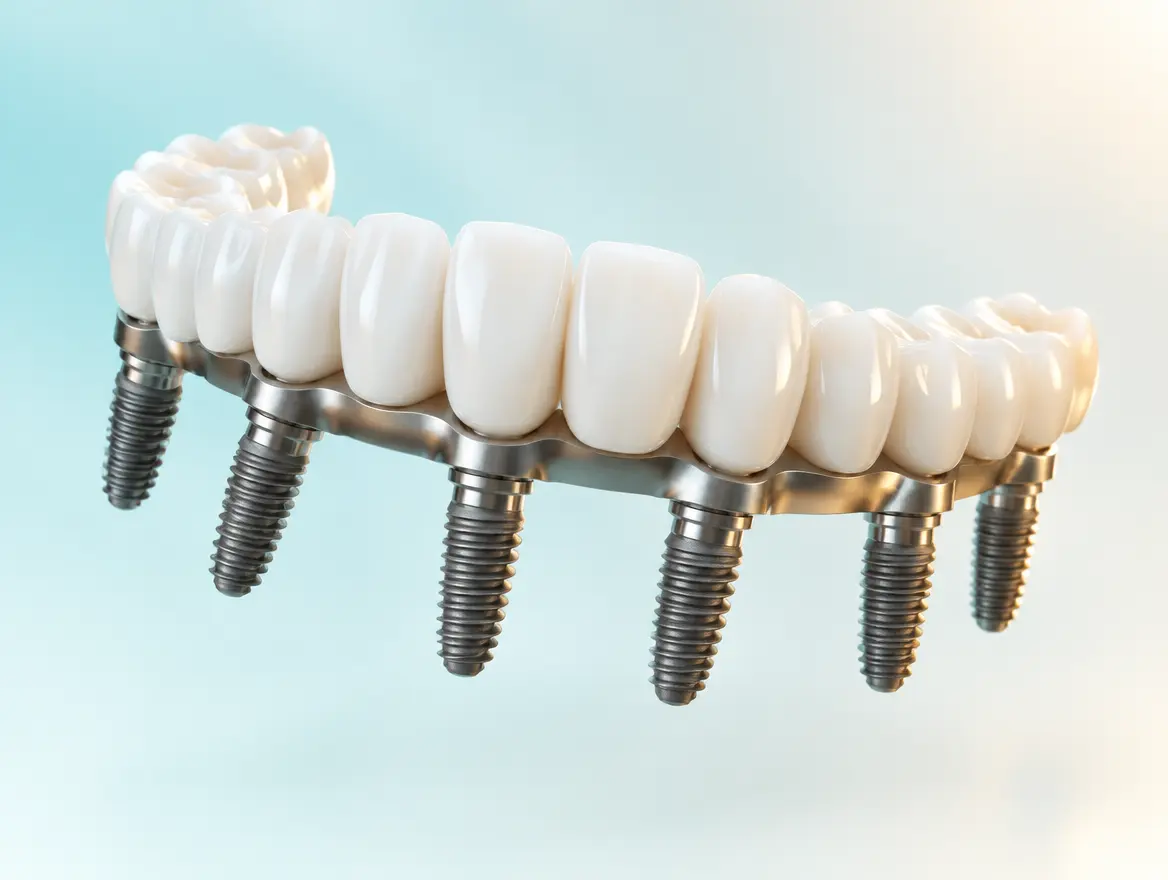
Dental work needs at least as much cleaning between and underneath as natural teeth. A crown can still decay at its edge if plaque sits there. Under a bridge, including an implant bridge, food and plaque collect beneath the false tooth. Around implants, plaque can inflame the gum and, over time, lead to loss of the bone supporting the implant.
| Situation | Useful tools |
|---|---|
| Natural teeth with small gaps | Fine interdental brushes; floss or tape where very tight |
| Gum recession or treated gum disease | Larger interdental brushes in several sizes |
| Crowns next to each other | Interdental brushes along each crown edge |
| Bridge | Interdental brushes at each end; threader floss or "super floss" under the false tooth |
| Implants or a fixed full-arch bridge | Plastic-coated interdental brushes, a single-tufted brush, sometimes a water flosser |
How we approach this at Precious Dental
When you send us an X-ray for a treatment plan, our dentists look at the bone between the teeth before anything else. If there are signs of gum disease, we say so in writing, and we treat the gums before placing crowns or implants. Our gum treatment page explains why. Before you go home after implant or bridge work, we show you which cleaning tools fit your new teeth. For full-arch cases such as those on our full mouth implants page, cleaning under the bridge every day is part of keeping it, and regular check-ups are a condition of the written guarantee.
Getting started this week
Buy a mixed pack of one brand, or ask your hygienist for your sizes. Clean between your teeth once a day, before your night-time brush. Expect some bleeding and do not give up on day three. After a fortnight, most people's gums look pinker, bleed less and feel firmer, and the habit feels normal.
Sources
- Worthington HV et al. Home use of interdental cleaning devices, in addition to toothbrushing, for preventing and controlling periodontal diseases and dental caries. Cochrane Database Syst Rev 2019
- GOV.UK: Delivering better oral health, chapter 8: oral hygiene
- Oral Health Foundation: Cleaning between your teeth
- NHS: How to keep your teeth clean
Checked October 2026. Where we give our own view as a clinic, we say so.
Common questions
Are interdental brushes better than floss?
For many adults, yes. A Cochrane review found low-certainty evidence that interdental brushes may reduce gum inflammation more than floss. GOV.UK guidance for dental teams says people with gum disease, who usually have larger gaps, should use interdental brushes, and floss can be used where teeth are very close together.
Why do my gums bleed when I use them?
Bleeding is usually a sign of gum inflammation that was already there, caused by plaque in the gaps. Keep going gently every day. It normally settles within one to two weeks. If it does not, or the gum is sore and swollen, see your dentist or hygienist.
Can interdental brushes make gaps bigger?
A brush of the right size, used gently, should not. A brush that is forced into a gap, or a wire scraping the tooth, can damage the gum. Use a smaller size if it does not go in easily.
How often should I replace an interdental brush?
When the bristles look flattened or the wire is bent, often after about a week of daily use. Rinse it after each use and let it dry.
Should I use them before or after brushing?
GOV.UK's Delivering better oral health suggests that cleaning between teeth before brushing is good practice, as it helps build the habit. Either works if you do it every day.
Do I need them with implants or a bridge?
Yes. Plaque collects under and around bridges and implant teeth. Interdental brushes, sometimes with a plastic-coated wire, are often the easiest tool. See our implant bridge page.
Ask a Turkish dentist for a free written plan
Phone photos of your smile or an old X-ray are enough. You get the treatment, the implant brand and the price in pounds on paper, with no obligation to book.