Knocked-out adult tooth: first aid for the first hour
A knocked-out adult tooth can often be saved, but only if the right things happen quickly. This is the order to do them in.
 Checked for accuracy by Dt. Hüseyin Yavuz Özbek, our implant surgeon · Last updated October 2026
Pick the tooth up by the crown, never the root. If it is dirty, rinse it briefly in milk, saline or saliva, then push it gently back into the socket and bite on a clean cloth. If you cannot put it back, keep it in milk or saliva and get to a dentist as fast as possible. Call your dentist straight away, or NHS 111 if they are closed. Never put a baby tooth back.
If an adult tooth has just been knocked out, stop reading after this paragraph and act. Pick the tooth up by the white part you normally see, not the root. If it is dirty, rinse it for a few seconds in milk or saliva. Push it gently back into the gap the right way round and bite on a clean handkerchief to hold it. If that is not possible, put it in a cup of milk or spit, and call your dentist now. If they are closed, the NHS says to call 111. Then come back and read the rest.
The rest of this guide explains why each step matters and what happens over the following weeks. It is written by the dentists at our clinic in Antalya and follows the NHS advice and the guidelines of the International Association of Dental Traumatology (IADT), which dentists use for injuries like this.
Why the first hour matters so much
A tooth is held in its socket by a thin layer of tissue called the periodontal ligament. When a tooth is knocked out, part of that ligament stays on the root surface. Those cells are alive, and they are what lets the tooth reattach to the bone if it goes back in.
The cells start dying as soon as they dry out. The IADT avulsion guideline puts it plainly: replanting immediately gives the best outcome, and once the root has been dry for more than about 60 minutes, the cells are very likely to be dead. A tooth replanted after that can still be kept for a while, but it is more likely to be slowly replaced by bone and lost in the long run.
So the goal in the first hour is simple: keep the root surface wet and alive, and get the tooth back in its socket, either by you or by a dentist, as soon as possible.
Step by step: what to do
- Check the person first. A blow hard enough to knock out a tooth can cause a head injury. If they lost consciousness, are confused, being sick or have a severe headache, go to A&E or call 999.
- Find the tooth. Hold it by the crown, the smooth white part. Do not touch the root, and do not wipe or scrub it.
- Rinse only if dirty. The NHS advises a gentle rinse in milk, saline or saliva. A short dip is fine; do not let it sit in tap water.
- Put it back if you can. Check which way it faces by comparing with the tooth next to it. Push it gently into the socket. It may slide in with light pressure.
- Hold it in place. Bite gently on a clean, folded cloth or handkerchief.
- If it will not go back, store it. Put it in milk, or in saliva by spitting into a clean pot. An adult can also keep the tooth inside the cheek, but not a child, who might swallow it.
- Get to a dentist. Ring your dentist immediately and say a tooth has been knocked out. Out of hours, their answerphone may give an emergency number, or call NHS 111. The NHS says to ask for an emergency appointment even if you cannot find the tooth.
What not to do
- Do not hold or scrub the root, or remove the tissue on it.
- Do not wrap the tooth in a dry tissue or put it in your pocket.
- Do not store it in water. Tap water harms the root cells within a short time.
- Do not use disinfectant, alcohol or mouthwash on the tooth.
- Do not replant a baby tooth. The NHS warns this can damage the adult tooth underneath.
- Do not wait to see whether it hurts later. Every minute counts.
Storage options compared
If the tooth cannot go straight back in, what you keep it in matters. The IADT guideline ranks storage media roughly as follows, and milk is the one most people have to hand.
| Storage | Suitable? | Notes |
|---|---|---|
| Back in the socket | Best | The body is the ideal storage place |
| Special tooth storage solution (from a first-aid kit) | Very good | Some sports clubs and schools keep these |
| Cold milk | Good | Ordinary milk from the fridge is fine |
| Saline (salt water for contact lenses or wounds) | Good for a short time | Use if milk is not available |
| Saliva | Acceptable for a short time | Spit into a cup, or an adult can keep it in the cheek |
| Tap water | Not suitable for storage | Brief rinse only, if nothing else is at hand |
| Dry (tissue, pocket) | Harmful | Root cells die quickly |
What the dentist will do
If you managed to put the tooth back, the dentist checks its position on an X-ray and adjusts it if needed. If you brought it in milk or saliva, they clean it gently and replant it. The NHS describes this sequence, and the IADT guideline adds the detail dentists follow.
The tooth is then fixed to the teeth on either side with a flexible splint, usually a thin wire or fibre bonded on with tooth-coloured material. For a knocked-out tooth this generally stays for about two weeks. You may be given antibiotics and a chlorhexidine mouthwash, and your tetanus status may be checked if the tooth fell on soil.
In adults, the nerve inside a knocked-out tooth almost never survives. The IADT guidance recommends starting root canal treatment within about one to two weeks of replanting, before infection and root damage set in. For a few days you will be asked to eat soft food, brush carefully and avoid biting on the tooth.
The months and years after
Follow-up is not optional. Dentists usually review a replanted tooth several times in the first year, and then yearly, with X-rays to check the root and the bone. Many replanted teeth settle well. Some go through replacement resorption, where the root is slowly turned into bone. The tooth can feel firm and look normal for years while this happens, then eventually loosen. The chance of this is higher when the tooth was out and dry for a long time.
Signs to report between check-ups include the tooth darkening, a small lump on the gum above it, pain on biting, or the tooth feeling looser.
If the tooth cannot be saved
Sometimes the tooth is lost, cannot be found, or fails after replanting. The NHS notes that a denture is often used first while the socket heals, with a bridge or a dental implant as later options. Each has its place:
- A partial denture is quick and inexpensive, and good while you decide.
- A bridge uses the neighbouring teeth for support. Our dental bridges page explains when that is sensible and when it means cutting down healthy teeth.
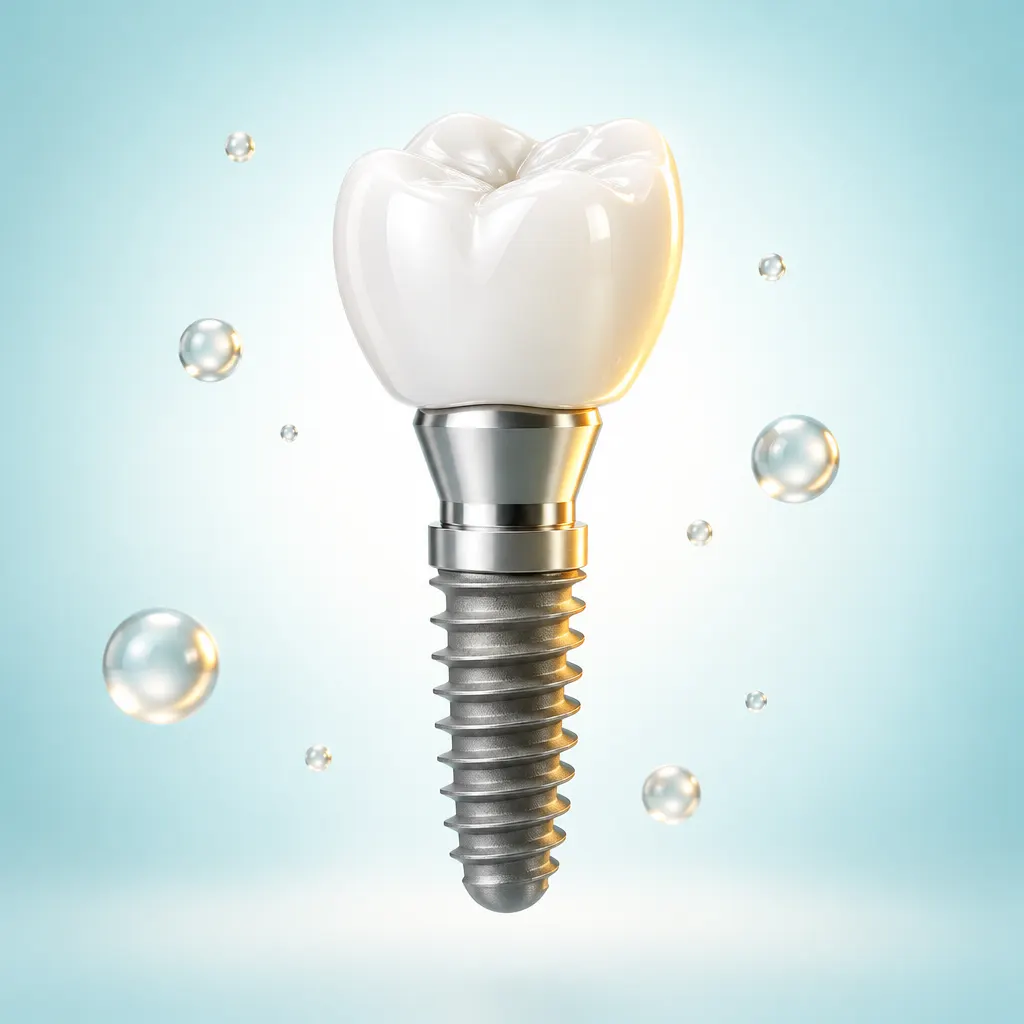
- An implant replaces the root in the bone and leaves the neighbours alone. Front teeth often need careful planning because the bone at the front of the jaw is thin, and after an injury it may need a graft.
Timing depends on healing and on the bone. In younger people still growing, implants are delayed until growth is complete. In adults, the dentist usually waits for the socket to heal and then plans from a scan.
How we fit in at Precious Dental
To be clear, the first aid and the replanting must happen at home, with your own dentist or an emergency service in the UK. We are a clinic in Antalya and we cannot help in that first hour.
Where we sometimes help is later, if the tooth could not be saved. You can send us a recent X-ray and photos by WhatsApp, and a Turkish dentist on our team will write back with an itemised plan. For a single front tooth this is often an implant with a zirconia crown, £450 in total, planned on a 3D scan at the clinic. If bone has been lost, a bone graft is £150 per 1cc, and your written plan will show whether you need it. Implants come with an implant passport and copies of your scans, and a written guarantee whose conditions are on our guarantee page.
To sum up: hold it by the crown. Keep it wet, in the socket or in milk. Get to a dentist fast, and call NHS 111 if you cannot reach one. If you play sport, a custom mouthguard costs far less, in every sense, than replacing a front tooth.
Sources
- NHS: Knocked-out tooth
- Fouad AF et al. IADT guidelines for the management of traumatic dental injuries: 2. Avulsion of permanent teeth. Dent Traumatol 2020
- International Association of Dental Traumatology
- Dental Trauma Guide (IADT)
Checked October 2026. Where we give our own view as a clinic, we say so.
Common questions
How long do I have to save a knocked-out tooth?
The sooner the better. The IADT guidelines say putting the tooth back straight away, ideally within minutes, gives it the best chance. If the root has been dry for more than an hour, the cells that reattach it are likely to have died, although a dentist may still replant it for a time.
Can I store a knocked-out tooth in water?
Water is not recommended for storage. The NHS advises milk or saliva, and the IADT lists milk, saline and saliva as suitable. Water damages the cells on the root surface. A brief rinse to remove dirt is different from leaving it soaking.
Should I put a child's baby tooth back?
No. The NHS is clear that a baby tooth should not be replanted, because it can damage the adult tooth developing underneath. Take the child to a dentist so they can check the area.
Will a replanted tooth last?
Some last for many years. Others are slowly replaced by bone over months or years, a process called replacement resorption, and are lost eventually. Regular follow-up X-rays show how the tooth is doing. A replanted tooth usually also needs root canal treatment.
Do I need a tetanus jab?
If the tooth fell on soil or the wound is dirty, your dentist or GP may check your tetanus status. The IADT guidance includes this as part of the care after a knocked-out tooth.
What if the tooth cannot be saved?
The gap can be filled with a denture, a bridge or an implant once the area has healed. Your dentist will usually wait for healing before deciding. Our dental implants page explains the implant option.
Ask a Turkish dentist for a free written plan
Phone photos of your smile or an old X-ray are enough. You get the treatment, the implant brand and the price in pounds on paper, with no obligation to book.