What happens at a first dental consultation abroad
The first appointment is where a dentist decides what your mouth needs, and where you decide whether you trust them. A good one is unhurried, thorough and ends with a plan on paper.
 Checked for accuracy by Dt. Hüseyin Yavuz Özbek, our implant surgeon · Last updated October 2026
A good first dental consultation abroad starts with your medical history and what you want to change, then a full examination of teeth, gums, bite and soft tissues, and X-rays or a 3D scan where the treatment needs one. The dentist should explain what they found, give you options including less invasive ones, and put the recommended plan, risks and price in writing. Nothing irreversible should be done until you have understood the plan and agreed to it.
A good first dental consultation abroad should feel much like a thorough new-patient appointment at home. The dentist takes your medical history, listens to what you want, examines your teeth, gums and bite properly, takes the X-rays or 3D scan your case needs, then explains the findings and gives you a written plan. You should leave the room understanding what is wrong, what the options are, and what each one costs, before anything permanent is done.
If you are travelling to a dentist in Turkey or elsewhere, this appointment matters even more than it would at home. You will probably have exchanged photos and messages already, and you may have a provisional plan. The consultation is where that plan meets your actual mouth. This guide explains what a careful first visit includes, what should make you pause, and the questions worth asking before you agree to treatment.
It starts with talking, not looking
A careful dentist does not reach for the mirror first. They ask questions. Expect to be asked about:
- Your health. Heart conditions, diabetes, blood pressure, osteoporosis and any medicines for it, cancer treatment, smoking, and every medicine you take with its dose. Some of these change how the mouth heals or which treatments are safe.
- Your dental history. What has been done before, what has failed, whether you grind your teeth, and whether any tooth is painful right now.
- What you want. Whether your main concern is chewing, comfort, appearance or all three. A patient who wants to eat a steak again needs a different conversation from one who mainly wants whiter front teeth.
- Your limits. Budget, how many trips you can make, how long you can stay, and how you feel about surgery.
This part is also your first chance to judge the dentist. Do they listen, or do they talk over you? Do they ask about your health in detail, or rush past it? A dentist who is careful here is usually careful elsewhere.
A full examination, not just the teeth you mentioned
Even if you have come about a single gap, the dentist should look at the whole mouth. NICE guidance on oral health reviews in the UK describes this as more than a quick look at teeth: it includes the soft tissues, gums, bite and your risk of future problems. A thorough exam usually covers:
- every tooth, checking for decay, cracks, worn surfaces and failing fillings or crowns
- the gums, often measuring the depth of the pockets around teeth with a thin probe
- how your teeth meet, and signs of grinding or clenching
- the jaw joints and chewing muscles
- the tongue, cheeks, palate and floor of the mouth, looking for anything unusual
That last check is a mouth cancer screen, and it should happen whatever treatment you have come for. The NHS lists mouth ulcers that do not heal within three weeks and red or white patches in the mouth among the warning signs. It takes the dentist a minute or two.
X-rays and scans: the right image for the job
Most consultations include some imaging. Which kind depends on the treatment. UK selection criteria for dental radiography say each X-ray should be justified, meaning it should answer a question the dentist cannot answer otherwise.
| Treatment being considered | Imaging you would usually expect |
|---|---|
| Check-up, fillings, gum assessment | Bitewing or small X-rays, sometimes a panoramic X-ray |
| Crowns or veneers on several teeth | Panoramic X-ray and close-up X-rays of doubtful teeth |
| Root canal or a painful tooth | Close-up X-ray of that tooth; sometimes a small 3D scan |
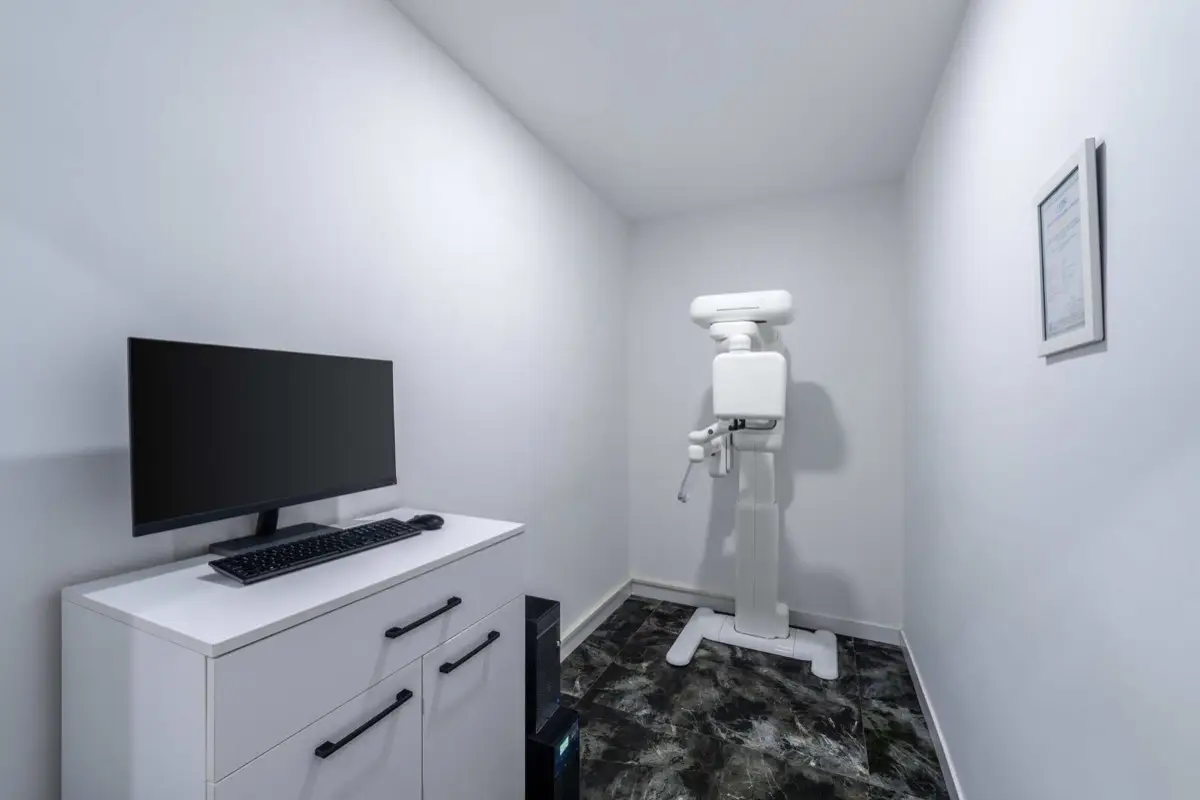
| Dental implants or full-arch implants | 3D CBCT scan, to measure bone width and find the nerve and sinus |
If someone proposes implant surgery without a 3D scan, ask why. A flat X-ray cannot show bone width, and placing implants without knowing it is guesswork. If you are having crowns or veneers, many clinics also take photos and a digital scan of your teeth so the new smile can be planned on screen first. Our page on digital smile design explains how that works.
The explanation, and the options
After the exam, the dentist should sit down with you and explain what they found. They should show you the images and point at what they mean. Then they should talk through the options, which nearly always means more than one:
- the treatment they recommend, and why
- at least one less invasive alternative, where there is one, such as keeping a tooth with a filling instead of a crown
- what happens if you do nothing for now
In UK law and in good practice everywhere, consent means understanding the options and their risks, not just signing a form. The NHS explains that consent must be voluntary and informed, and that you can change your mind. A dentist abroad is working under their own country's rules, but you are entitled to expect the same honesty.
Be wary if every tooth is recommended for a crown, if healthy teeth are to be filed down for appearance alone without that being discussed openly, or if the plan doubles in size with no clear reason. People who come home with problematic "Turkish teeth" often describe a first appointment that moved very fast.
Before you travel: make the consultation count
Much of what makes a first appointment useful happens before you sit in the chair. If you arrive with the right information, the dentist spends less time guessing and more time explaining.
- write down every medicine you take, with the dose, and any allergies
- ask your UK dentist or GP for a short note on any relevant conditions, such as heart problems or bisphosphonate treatment for osteoporosis
- bring copies of any recent X-rays, even if you have already sent them
- note which teeth bother you and what you dislike about your smile, in your own words
- write your questions down in advance, because it is easy to forget them in the chair
Jet lag is not an issue between the UK and Türkiye, but a long day of travel is. If you can, avoid booking the consultation for the evening you land.
The written plan
A good consultation ends with a plan on paper or by email that you can take away and read. It should list the teeth involved by number, what will be done to each, the materials and brands, the number of visits and days, the guarantee, and the total price. If the plan differs from what you were sent before you travelled, the dentist should explain each difference.
Give yourself time with it. Even if you are only in the country for a week, an evening to read the plan, look things up and sleep on it is reasonable. If you feel rushed, that tells you something.
Questions to ask before anything is drilled
- What exactly is wrong? Ask to see it on the X-ray or scan.
- What are my other options? Including keeping teeth, doing less, or doing it in stages.
- Which teeth will be filed, and how much? Crowns and veneers remove tooth that never grows back.
- Who will do each part? The surgeon, the dentist fitting the crowns, and how to reach them later.
- What are the risks for me? Given your health, your bite and your gums.
- What does the guarantee cover? And what conditions do you need to meet to keep it.
- What happens if something goes wrong at home? How they handle problems once you are back in the UK.
- Can I have copies of my X-rays and scans? You should leave with them.
Nothing irreversible should happen in the first hour of meeting a dentist unless you have already agreed the plan in writing and feel sure about it.
How it runs at our clinic
At Precious Dental, your first visit in Antalya is an examination by one of our dentists, X-rays and a 3D scan, and a conversation about the plan you were sent before you travelled. Your final plan is then confirmed in writing: which teeth, which materials and, for implants, how many, which brand and why. We prefer to keep healthy teeth rather than crown them, and if the scan changes anything, the dentist explains it before you agree. You can read more about our approach on why patients choose Precious Dental.
Sources
- NHS: Consent to treatment
- NICE CG19: Dental checks, intervals between oral health reviews (what an oral health assessment covers)
- NHS: Mouth cancer
- College of General Dentistry (FGDP): Selection Criteria for Dental Radiography
- Health Türkiye (official health tourism portal)
Checked October 2026. Where we give our own view as a clinic, we say so.
Common questions
How long should a first dental consultation take?
For a simple case, often 30 to 60 minutes including X-rays. For a full-mouth case with a 3D scan, longer. A consultation that takes a few minutes before teeth are prepared is a warning sign.
Can treatment start on the same day as the consultation?
Sometimes, for straightforward work you have already discussed and agreed in writing. You should never feel pushed to start irreversible treatment, such as filing teeth for crowns, before you have had the chance to read the plan and ask questions.
Should the plan change after the consultation?
It can, and a small change is normal. Photos and an old X-ray cannot show everything. The dentist should explain any difference from the plan you were sent, why it has changed, and what it does to the price, before you agree.
Can I bring someone into the consultation?
Yes. Having a partner, friend or family member with you helps you remember what was said and think of questions. Most clinics are happy for a companion to sit in.
What should I bring?
A list of your medicines and doses, details of any health conditions, any recent X-rays or scans, notes from your UK dentist if you have them, and a list of your own questions.
Can I refuse part of the plan?
Yes. It is your mouth and your decision. A good dentist will explain the likely consequences of each choice, including doing nothing, and respect what you decide.
Ask a Turkish dentist for a free written plan
Phone photos of your smile or an old X-ray are enough. You get the treatment, the implant brand and the price in pounds on paper, with no obligation to book.