Menopause and your teeth: what changes and what helps
Hot flushes and poor sleep get most of the attention, but the mouth is affected by the menopause too. Most of the changes are manageable once you know what is behind them.
 Checked for accuracy by Dt. Hüseyin Yavuz Özbek, our implant surgeon · Last updated October 2026
Falling oestrogen around the menopause is linked with a drier mouth, gums that bleed or feel sore more easily, a higher chance of burning mouth syndrome and, through osteoporosis, loss of bone that may include the jaw. These are associations from research, not certainties, and many women notice none of them. Good saliva habits, fluoride, careful cleaning between the teeth and telling your dentist about any bone medicines cover most of the risk.
The menopause can change your mouth. The most common changes are a drier mouth, gums that bleed or feel tender more easily, a burning feeling on the tongue or lips, and, over the longer term, loss of bone density that may include the jaw. None of these is inevitable. Plenty of women go through the menopause with no change in their teeth at all. But if something in your mouth feels different in your late forties or fifties, hormones are one of the things worth thinking about.
This article covers what research has found, what is still uncertain, and what you can do about each change. It is written for women in the UK who want plain answers. It does not replace advice from your own dentist or GP, and a link in a study is not the same as proof that one thing causes another.
Why hormones matter in the mouth
Oestrogen does not only act on the reproductive system. There are oestrogen receptors in the lining of the mouth, in the salivary glands and in bone. When oestrogen levels fall around the menopause, these tissues can respond. A review in the Journal of Mid-Life Health describes thinner, more fragile lining of the mouth, changes in saliva and a link with bone loss in the jaw. Most of the studies behind these findings are small or observational. They show that the changes are seen more often in women after the menopause. They do not show that the menopause is the only cause, because ageing, medicines and general health change at the same time.
That is the honest picture: hormonal change is one factor among several. It is a useful explanation when you notice a change, but it should not stop your dentist checking for other causes.
A drier mouth
Many women notice their mouth feels drier around the menopause. Some of this may come from hormonal change in the salivary glands. Some of it comes from medicines that are often started at the same age, such as antidepressants, blood pressure tablets and antihistamines, which list dry mouth as a side effect. Poor sleep and breathing through the mouth at night add to it.
Saliva matters more than most people realise. It washes food away, neutralises acid after you eat and carries minerals that repair the very early stages of decay. With less of it, teeth decay more easily, especially at the gum line and around old fillings and crowns. Dentures can also become harder to wear.
Simple steps help. Sip water through the day, chew sugar-free gum after meals to stimulate saliva, cut down on alcohol and caffeine, and avoid sucking sweets to keep the mouth moist. A pharmacist can suggest saliva substitute gels or sprays. If a medicine seems to be the trigger, ask your GP whether there is an alternative, rather than stopping it yourself. We go into more detail in our post on dry mouth causes and relief.
Gums that bleed or feel sore
Hormonal change can make gum tissue react more strongly to plaque. Some women describe gums that look redder, bleed when brushing or feel sore. In most cases the underlying problem is still plaque at the gum line; the hormones make the reaction to it more noticeable.
Bleeding gums are the first sign of gum disease, which the NHS lists as one of the main reasons adults lose teeth. Left alone, early gum inflammation (gingivitis) can progress to periodontitis, where the bone holding the teeth is slowly lost. The good news is that gingivitis is reversible with better cleaning. Brush twice a day for two minutes, clean between the teeth once a day with interdental brushes, and do not stop because the gums bleed at first. Bleeding usually settles within a couple of weeks of thorough cleaning. If it does not, see a dentist or hygienist.
Gums also recede with age, which exposes the root surface. Roots are softer than enamel and decay more easily, and they are often the source of sensitivity. Our post on receding gums explains the options. If gum disease has already caused damage, our page on gum treatment describes what a deep clean involves.
Burning mouth syndrome
Burning mouth syndrome is a burning or scalding feeling in the tongue, lips, gums or palate, often with a dry mouth or an odd taste, when the mouth looks completely normal. Clinical reviews describe it as most common in women around and after the menopause, and hormonal change is one of the suggested factors. The exact cause is not well understood.
Because it is a diagnosis made once other causes are ruled out, it is worth seeing your dentist or GP. They will usually check for:
- oral thrush or other infections
- low iron, vitamin B12 or folate, which a blood test can show
- diabetes
- dry mouth from medicines
- a rough filling, sharp tooth or a denture that rubs
- a reaction to toothpaste or food
If one of these is found, treating it often solves the problem. If none is, a GP can discuss treatments that ease the symptoms. Avoiding very hot, spicy or acidic food and drink, alcohol-based mouthwash and smoking helps many people.
Bone density and the jaw
The NHS explains that women lose bone more quickly in the years after the menopause because oestrogen helps protect bone. This is why osteoporosis is more common in women. Several studies have found that women with low bone density elsewhere in the body tend to have less dense jaw bone and, in some, more tooth loss. Again, this is an association. Women with osteoporosis are often older, and age, gum disease and smoking all play their part. It is not clear that osteoporosis on its own causes teeth to be lost.
What is clearer is that bone loss in the jaw matters for dental planning. When a tooth is lost, the bone where it stood slowly shrinks. If you later want an implant, the dentist needs enough bone to place it. Bone quality is one of the things a 3D scan shows.
Bone medicines and dental treatment
Many women are prescribed bisphosphonates such as alendronic acid, or injections such as denosumab, to protect their bones. These medicines are linked with a rare problem called medication-related osteonecrosis of the jaw, where bone in the jaw does not heal after an extraction or surgery. For people taking these medicines for osteoporosis, the risk is low. It is higher with the larger doses used in cancer treatment.
The NHS advice is simple: tell your dentist you take the medicine, keep up regular check-ups and look after your teeth, so that extractions are less likely to be needed. Never stop a bone medicine because of dental work without speaking to the doctor who prescribed it. Routine treatment such as cleaning and fillings carries no special risk.
HRT and your mouth
Women often ask whether hormone replacement therapy will protect their teeth. A few studies suggest that women on HRT have healthier gums or keep more bone in the jaw, but the evidence is limited and not strong enough to recommend HRT for oral health. The NICE menopause guideline sets out how HRT is weighed up for symptoms such as hot flushes, mood change and bone protection. If HRT suits you for those reasons, any benefit to your mouth is a bonus. Decisions about it belong with your GP.
A simple checklist for your mouth
- Tell your dentist about the menopause and your medicines. Include HRT, bone medicines, antidepressants and blood pressure tablets. They change what the dentist looks for.
- Use a fluoride toothpaste and spit, do not rinse. Leaving fluoride on the teeth helps protect roots and old fillings. If you are prone to decay, a dentist may prescribe a higher-strength paste.
- Clean between your teeth every day. Interdental brushes reach where gum disease starts.
- Keep the mouth moist. Water, sugar-free gum and less alcohol go a long way.
- Watch sugar frequency. A dry mouth and frequent snacking together are hard on teeth.
- Get any burning, ulcer or patch checked. An ulcer or patch that has not healed in three weeks should always be seen.
How we approach this at Precious Dental
Many of our patients are women in their fifties and sixties, so these questions come up often. When you send us photos or an X-ray for a free treatment plan, we ask about your medicines, including bone medicines and HRT, before the dentist writes anything. If you take a bisphosphonate or denosumab, the dentist takes that into account when planning extractions or implants, and may want to know how long you have taken it. Bone is checked on a 3D scan at the clinic before any surgery. We would rather keep a healthy tooth than replace it, and if the right first step is gum treatment at home with your own dentist or hygienist, we will say so. Questions are answered on our FAQ page.
Sources
- NHS: Menopause symptoms
- Grushka M et al. Burning mouth syndrome. Am Fam Physician 2002
- NHS: Osteoporosis
- NHS: Alendronic acid
- NICE NG23: Menopause: diagnosis and management
- Suri V, Suri V. Menopause and oral health. J Midlife Health 2014
Checked October 2026. Where we give our own view as a clinic, we say so.
Common questions
Can the menopause make my teeth fall out?
Not directly. Teeth are lost mainly through gum disease and decay. Hormonal change may make gums more reactive and the mouth drier, which can make both problems more likely if they are not managed. Regular cleaning and dental check-ups make a big difference.
Will HRT help my teeth and gums?
There is not enough good evidence to take HRT for your mouth. Some studies suggest a benefit for gums and bone, but HRT is a decision about your whole health, made with your GP using the NICE menopause guideline. Ask about it for your symptoms, not your teeth.
Why does my mouth burn when nothing looks wrong?
This may be burning mouth syndrome, which is seen most often in women around and after the menopause. A dentist or GP should first rule out causes such as thrush, low iron or B12, diabetes, dry mouth or a denture problem. If none is found, treatment aims at easing the symptoms.
I take alendronic acid. Can I still have dental treatment?
Usually yes. Tell your dentist before any extraction or implant surgery, because these medicines carry a small risk of a jaw healing problem. For most people taking them for osteoporosis the risk is low, and routine fillings and cleaning are not affected. Do not stop the medicine without speaking to your doctor.
Can I have dental implants with osteoporosis?
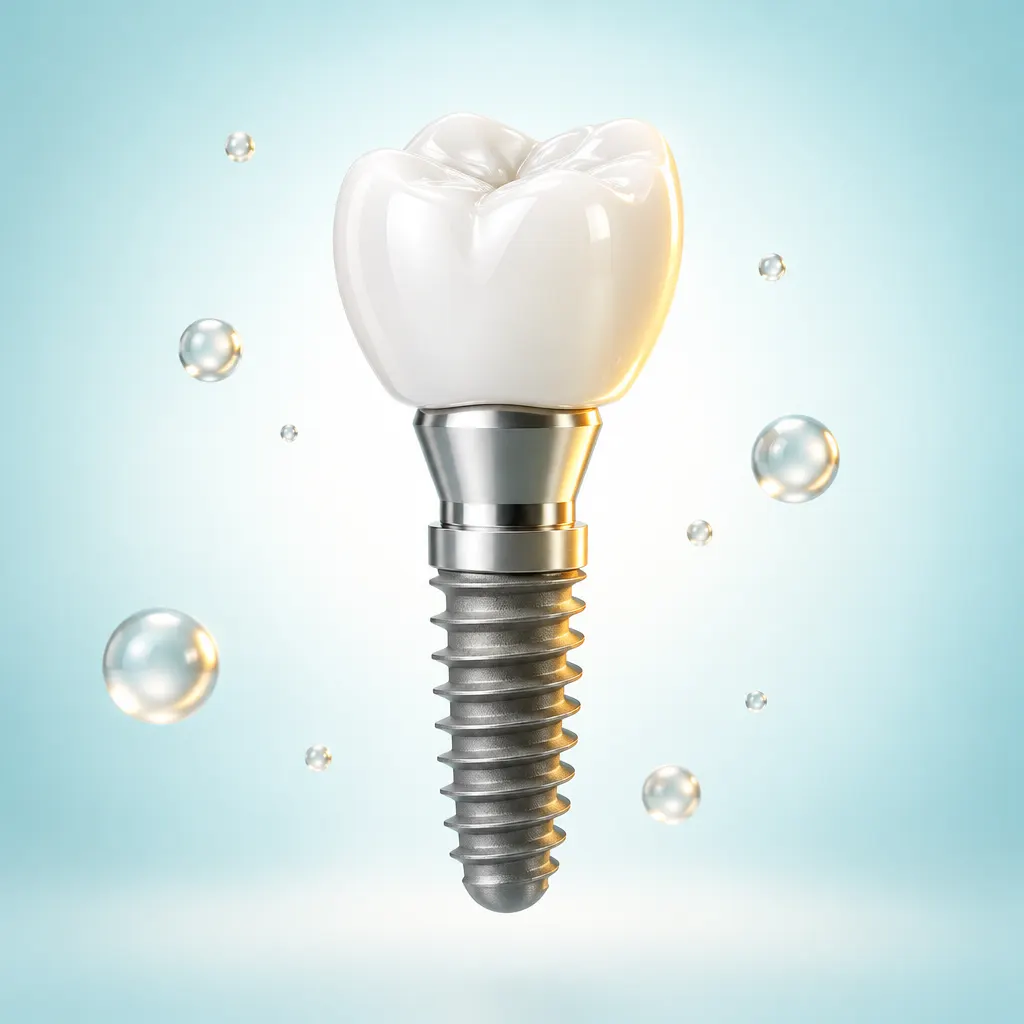
Often, yes. Osteoporosis on its own does not rule implants out. The dentist looks at the bone on a 3D scan, your medicines and your general health, then decides. See our page on dental implants.
Ask a Turkish dentist for a free written plan
Phone photos of your smile or an old X-ray are enough. You get the treatment, the implant brand and the price in pounds on paper, with no obligation to book.