Where the phrase "Turkish teeth" came from
A few years ago almost nobody in Britain said it. Now "Turkey teeth" is shorthand for a very white, very even smile made abroad. Here is how that happened, and what the words usually hide.
 Checked for accuracy by Dt. Hüseyin Yavuz Özbek, our implant surgeon · Last updated October 2026
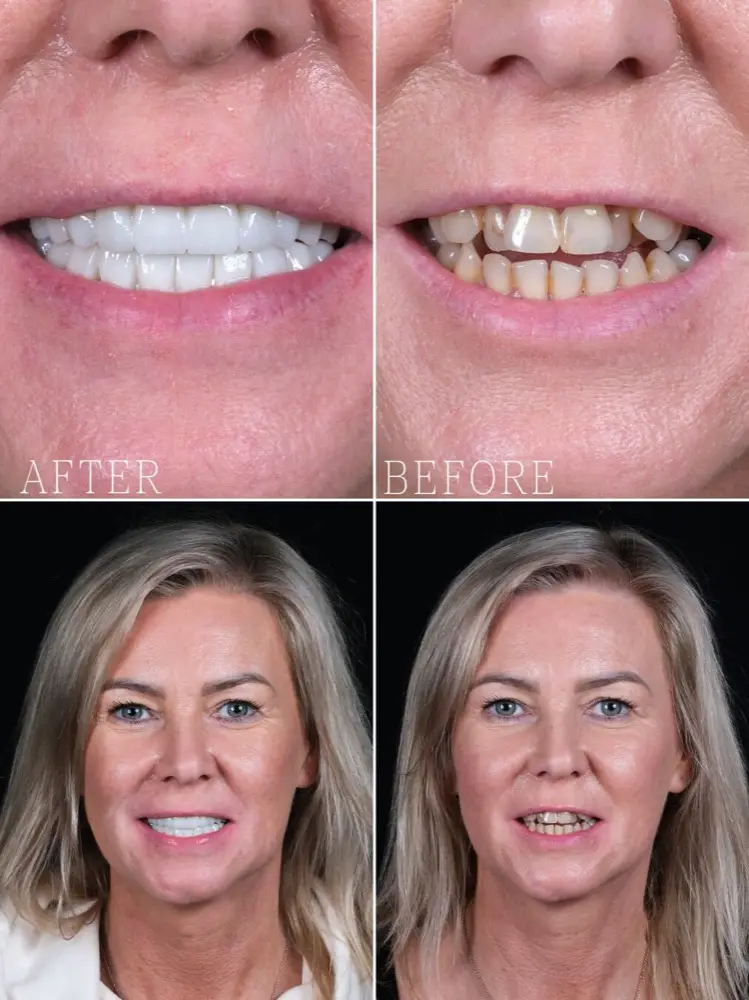
"Turkey teeth" (often said as "Turkish teeth") became common UK slang around 2021 and 2022, when reality TV contestants and social media users showed off bright, uniform smiles made in Turkey and UK media, including the BBC, covered the trend. The phrase usually describes a full set of crowns, sold under the word "veneers". It stuck because the look is easy to spot and the before-and-after videos travel fast online.
The phrase "Turkey teeth", and its close cousin "Turkish teeth", is British slang for a bright white, very even smile made at a dental clinic in Turkey. It spread quickly in 2021 and 2022, carried by reality TV and social media, and it has stayed in everyday speech since. We are a Turkish dental clinic in Antalya, so we hear it from UK patients every week. This article looks at where it came from, what it usually means in dental terms, and why it has proved so sticky.
A phrase that arrived very quickly
People from the UK have travelled to Turkey for dental work for many years, mostly quietly. What changed around 2021 was visibility. Several reality TV contestants, including people from shows such as Love Island, appeared on screen with new smiles and talked openly about having them done in Turkey. Their fans noticed. Some of those smiles were very white and very uniform, and they looked different from the smiles people were used to seeing.
At the same time, short videos on TikTok and Instagram showed the whole process: the flight, the clinic, the "before" teeth and the big reveal. Those clips were cheap to make and easy to share. Within months, "Turkey teeth" was a label people used for any smile of that type, whether it had been made in Turkey or not.
The national media followed. From 2022 onwards, UK outlets including BBC News ran reports on young Britons travelling for cosmetic dentistry, and on people who came home with problems. BBC Three also made a documentary about the trend. Dental bodies joined the conversation: the British Dental Association spoke publicly about patients returning with complications and urged people to think carefully before travelling. By 2023 the phrase was mainstream enough that most UK adults knew what it meant, even if they had never considered treatment abroad.
What the phrase usually describes
Here is the part that often gets lost. Most of the smiles that made "Turkey teeth" famous were not veneers in the sense a UK dentist would use the word. They were crowns.
The difference matters:
| Treatment | What happens to the tooth | Reversible? |
|---|---|---|
| Composite bonding | Resin added to the surface, often with no drilling | Usually yes |
| Laminate veneer | A thin layer, often under 1 mm, removed from the front surface | No, but most of the tooth remains |
| Full crown | Tooth reduced on every side to make room for a cap | No, the tooth needs a crown for life |
A crown covers the whole visible part of a tooth. To fit one, the dentist removes enamel and some of the dentine underneath from the front, the back, both sides and the biting edge. A well-known laboratory study by Edelhoff and Sorensen measured how much tooth different preparations remove from front teeth, and full crowns took a far larger share of the tooth than thin veneers did. That is why the "during" photos in many viral videos show small, pointed stumps. We cover those photos in more detail in our post on why teeth are filed down for crowns.
Online, though, the word "veneers" was used for everything. It sounds lighter and more cosmetic. Some patients only found out afterwards that they had 20 crowns, not 20 veneers. That gap between the word and the treatment is one of the main reasons the phrase picked up a negative edge.
Why the look is so recognisable
"Turkey teeth" became a label partly because the result was easy to spot from across a room. A few features came up again and again:
- A very bright shade, often whiter than any natural tooth.
- Teeth of the same height and width, with square edges.
- No small variations in colour between the edge and the gum.
- Crowns carried far back, so the whole smile is one block of white.
None of this is caused by the country or the materials. A zirconia or E-max crown can be made in a soft, natural shade with a slightly see-through edge. The bright, flat look is a choice. In some clinics it was the default, because it photographs well and it is what many patients asked for after seeing it online.
Taste changes over time. Some of the people who loved a very white smile at 25 feel differently at 35, and natural teeth next to the crowns darken a little with age while the crowns do not. That is a practical reason to think about shade carefully, whatever your age.
Why the phrase stuck
Plenty of slang comes and goes. This one has lasted, and we think there are a few plain reasons.
First, it names something real. Large numbers of UK patients do travel for dental work, and the phrase gives people a quick way to talk about it. Second, it carries a story. For some it means "I saved a lot of money and I love my smile". For others it means "I was talked into more than I needed". Both stories are true for different people, so the phrase gets used in praise and in warning.
Third, the cost of dentistry at home keeps it relevant. Private crowns and implants in the UK are expensive, and many adults struggle to find an NHS dentist taking new patients. As long as that is the case, people will keep looking abroad, and the phrase will keep being used. We look at the access side in why UK patients look abroad for dentistry.
What UK dental bodies have said
The British Dental Association and UK dentists have raised a fairly consistent set of concerns in public. In broad terms they are:
- Healthy teeth being crowned for cosmetic reasons, which commits the patient to a lifetime of crown replacement.
- Patients not being told clearly that crowns, not veneers, were being fitted.
- Treatment done in too short a time to check gum health or the bite properly.
- Problems such as sensitivity, gum inflammation or nerve damage showing up after the patient is home.
- Patients finding it hard to get follow-up care or fixes from a clinic far away.
These are fair points, and a responsible clinic in Turkey should agree with most of them. Crowns on healthy teeth are a real cost to the patient over decades. A crowned tooth can lose its nerve, the gum can recede to show the edge, and decay can start where the crown meets the tooth. The Oral Health Foundation explains that a crown should be looked after like a natural tooth for exactly this reason. Our post on Turkish teeth ten years on goes through what tends to happen over a decade.
How we use the phrase at our clinic
We use "Turkish teeth" on this website because it is what people search for. In the clinic, our dentists use the proper names, and the written plan lists the treatment for each tooth separately. If a front tooth only needs bonding or a thin veneer, the plan says so. Our dentists prefer to keep a healthy tooth rather than crown it, and Dt. Hüseyin Bayram in particular leans towards keeping natural tooth where the case allows.
If crowns are the right answer, for example because teeth are heavily filled, worn or broken, we make them from zirconia or E-max and talk through shade and shape before anything is prepared. You can read more on our full mouth crowns and veneers pages.
Before you book anything
If you are thinking about a "Turkish teeth" smile, the most useful thing you can do is make the slang precise. Ask any clinic, including us:
- Which teeth, and what treatment? Every tooth in the plan should be named with its treatment, or marked as left alone.
- How much tooth will be removed? A dentist should be able to explain the difference between a veneer and a crown for your mouth.
- Is my gum health good enough? Gum disease should be treated before crowns or veneers are fitted.
- What shade and shape? Ask to see the plan for the look, not only the price.
- What happens if something goes wrong? Ask for the guarantee in writing and read the conditions.
Our free plan starts with photos or a recent X-ray sent by WhatsApp or the form on our contact page. A dentist replies with an itemised written plan, and the final plan is confirmed after a 3D scan at the clinic. The phrase may be slang, but the decision is a medical one, and it deserves the plain words.
Sources
- BBC News: Health
- British Dental Association
- Oral Health Foundation: Crowns
- Edelhoff D, Sorensen JA. Tooth structure removal associated with various preparation designs for anterior teeth. J Prosthet Dent 2002
Checked October 2026. Where we give our own view as a clinic, we say so.
Common questions
Is "Turkish teeth" a medical term?
No. It is UK slang. Dentists talk about crowns, veneers, bonding or implants. The slang tends to lump them all together, which is one reason patients are sometimes unsure what they actually had done.
Are "Turkey teeth" always crowns?
Not always, but very often. Many of the smiles that made the phrase famous were full-coverage crowns on most of the visible teeth. Thin veneers and composite bonding are different treatments that remove much less tooth, or none.
Is it an insult to call someone's teeth "Turkey teeth"?
It is often used as a joke or a criticism of a smile that looks too white or too square. Plenty of people use it neutrally too. We use it on this site because it is what UK patients type into search engines.
Does dental treatment in Turkey always look like that?
No. The shade, shape and number of teeth are choices made by the patient and the dentist. A natural shade and a natural shape are just as possible. You can see our approach on our Turkish teeth page.
How do I know what I am being offered?
Ask for a written, itemised plan that names the treatment for each tooth: crown, veneer, bonding or nothing. If the plan says "veneers" but the tooth will be reduced all round, it is a crown.
Related pages on our clinic site
Turkish teeth
Crowns, veneers or your own teeth: an honest plan for a natural-looking smile.
Find out more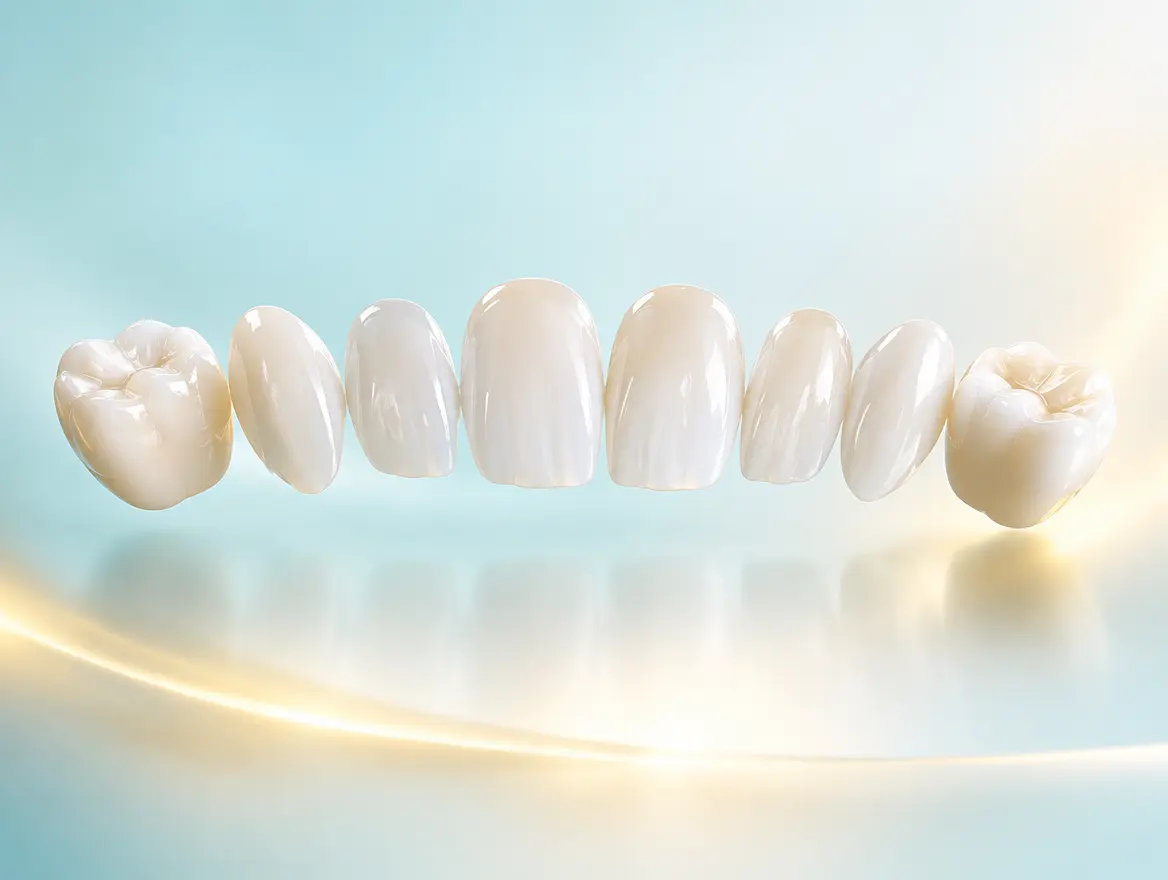
Turkish veneers
E-max laminate veneers, and an honest answer on whether you need crowns instead.
Find out more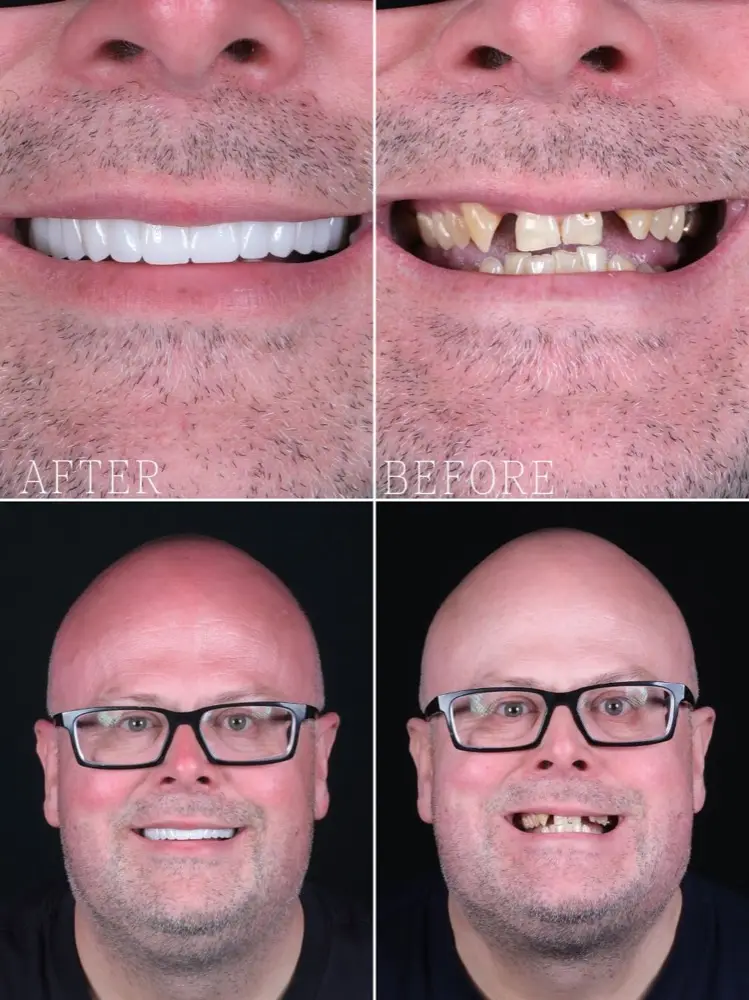
Full mouth crowns
A full set of zirconia crowns, counted tooth by tooth, in one 5-night trip.
Find out moreAsk a Turkish dentist for a free written plan
Phone photos of your smile or an old X-ray are enough. You get the treatment, the implant brand and the price in pounds on paper, with no obligation to book.